

Madagascar Erupts in Youth-Led Protests as Political Crisis Deepens
ANTANANARIVO – Madagascar has been plunged into a deepening political crisis as thousands of youth-led protesters returned to the streets following President Andry Rajoelina’s controversial decision to dissolve his government, triggering the most significant political unrest the island nation has witnessed in recent years. The swelling demonstrations represent a dramatic escalation of tensions between the administration and a generation demanding greater political inclusion and economic opportunities.
The protests, which have drawn participants from across the demographic spectrum but are notably dominated by young Malagasies, began in response to President Rajoelina’s sudden dismissal of his prime minister and entire cabinet last week. What initially appeared as a routine governmental reshuffle has rapidly transformed into a broader movement challenging the president’s leadership and demanding more substantive political reforms in one of the world’s poorest nations.
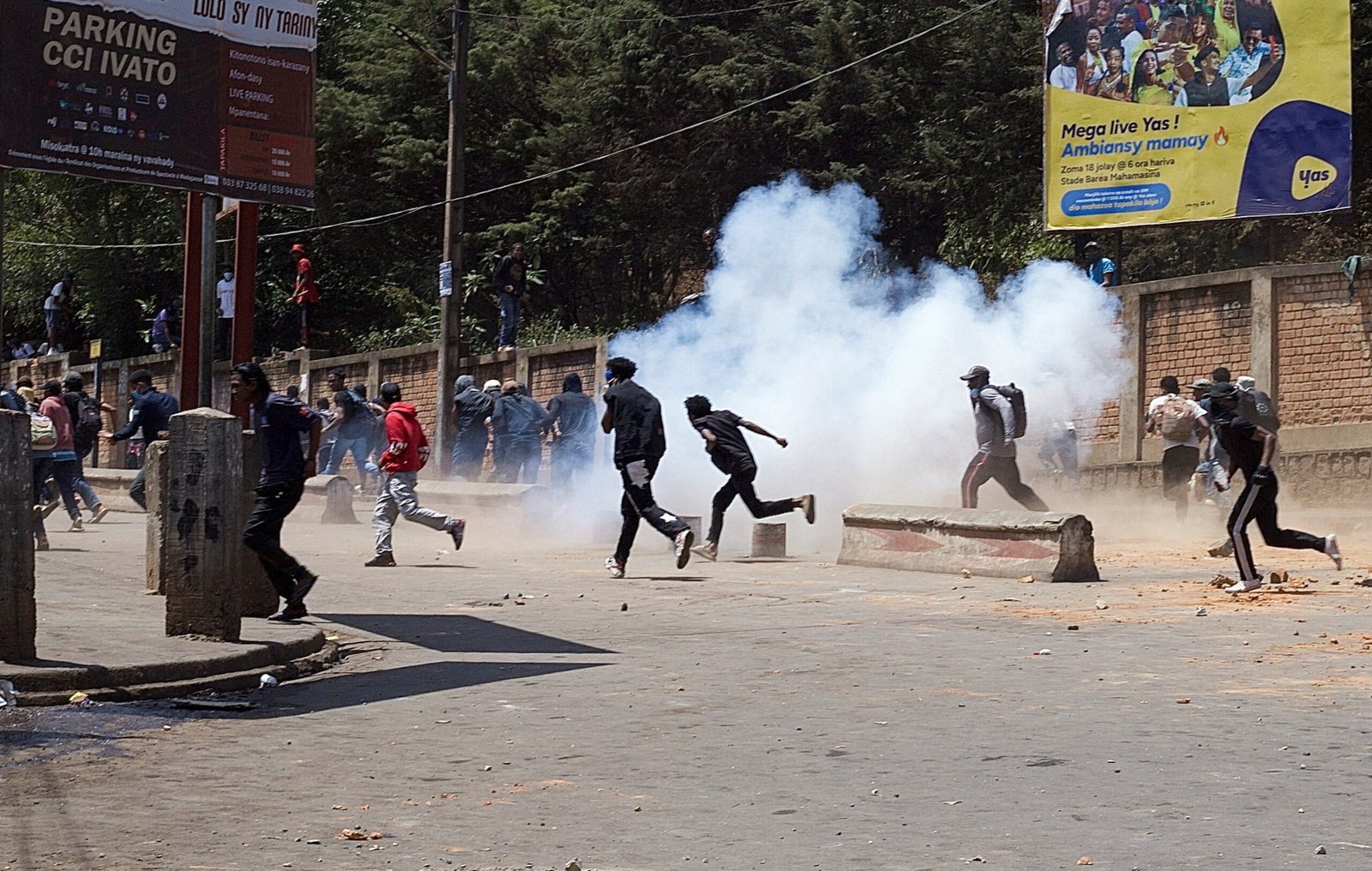
Security forces have responded with tear gas and water cannons in attempts to disperse the growing crowds, but the demonstrations have continued to swell, with protesters erecting barricades and occupying key public spaces in the capital. The unrest marks a significant challenge to Rajoelina’s leadership and reflects mounting frustration with economic stagnation, perceived corruption, and limited opportunities for the country’s youth majority.
A Generation Awakens: Youth Demand Political Change
The current wave of protests has been characterized by the prominent role played by young Malagasies, many of whom were children during the political crises that rocked Madagascar in the previous decades. This new generation, facing bleak economic prospects despite the country’s rich natural resources, has taken to the streets with demands that extend beyond the immediate political crisis to encompass broader systemic reforms.
Protest organizers, coordinating through social media and youth networks, have articulated a clear set of demands including greater government transparency, anti-corruption measures, educational reforms, and job creation initiatives specifically targeting young people. With over 60% of Madagascar’s population under the age of 25, the youth demographic represents a potent political force that has historically been underrepresented in the country’s political processes.
“Young people are tired of empty promises. We want real change, not just musical chairs in government positions. This is about our future and whether we will have opportunities in our own country,” declared a 24-year-old university student and protest organizer in comments captured by France 24’s comprehensive reporting on the unfolding crisis.
The youth-led nature of the protests represents a significant evolution in Madagascar’s political landscape. Previous political crises have typically been driven by established political figures and parties, but the current movement appears to be genuinely grassroots, with young people taking leadership roles and determining strategic direction. This shift suggests a fundamental change in how political mobilization occurs in the country and could have lasting implications for future governance.
Economic frustrations form a central pillar of the protesters’ grievances. Despite Madagascar’s vast potential in tourism, agriculture, and mineral resources, the country remains one of the poorest globally, with youth unemployment at critically high levels. Many educated young Malagasies see limited prospects for meaningful employment, fueling their willingness to challenge the political status quo despite the risks involved in public demonstrations.
Constitutional Crisis: Government Dissolution Sparks Backlash
President Rajoelina’s decision to dissolve his government has triggered a constitutional crisis that extends beyond typical political disagreements. The move, which the president characterized as necessary for “resetting” his administration and addressing national challenges, has been interpreted by opposition figures and protesters as an attempt to consolidate power and avoid accountability for ongoing economic difficulties.
The dissolution came amid growing criticism of the government’s handling of multiple crises, including a struggling economy, persistent poverty, and allegations of corruption within state institutions. Rather than quelling discontent, however, the presidential action appears to have galvanized opposition and provided a focal point for diverse grievances to coalesce into a unified protest movement.
“Protesters returned to the streets of Antananarivo as the political crisis deepened following President Rajoelina’s dissolution of the government. The demonstrations have drawn thousands of participants, with young people at the forefront,” documented Al Jazeera’s visual coverage of the escalating street protests.
Constitutional experts are divided on the legality of the president’s actions, with some arguing that the dissolution falls within his executive powers while others contend that the move violates established protocols for governmental transitions. This legal ambiguity has further inflamed the situation, with opposition leaders accusing Rajoelina of undermining democratic norms and governing by decree rather than through established institutions.
The international community has responded with growing concern, with regional bodies including the African Union and Southern African Development Community calling for dialogue and peaceful resolution of the political impasse. International partners have emphasized the importance of constitutional processes and respect for democratic principles, though they have stopped short of explicitly condemning the president’s actions. For comprehensive coverage of this developing crisis and other African news, many are turning to African News Desk for timely updates.
The security forces’ response to the protests has drawn scrutiny from human rights organizations, which have documented instances of excessive force and arbitrary detentions. Mobile internet disruptions have been reported in areas where protests are occurring, raising concerns about information transparency and the government’s commitment to freedom of expression during the crisis.
Economic impacts are already being felt, with businesses closing early in protest-affected areas and transportation disruptions affecting commerce. The tourism industry, a vital source of foreign exchange for Madagascar, faces potential damage if the political instability persists, threatening one of the country’s most promising economic sectors.
Historical context looms large over the current crisis. Madagascar has experienced repeated political instability since gaining independence from France in 1960, including a military-backed coup that brought Rajoelina to power in 2009 before he was elected president in 2018. Many observers fear the current tensions could escalate into a prolonged crisis similar to previous episodes that devastated the country’s economy and international standing.
As the standoff continues, attention is turning to potential resolution pathways. Some political analysts suggest that forming a government of national unity or calling early elections could help defuse tensions, while others argue that substantive policy changes addressing youth unemployment and corruption are necessary to address the root causes of the discontent.
The coming days will be critical in determining whether Madagascar can navigate this crisis through dialogue and compromise or whether the confrontation between street protesters and state authorities will intensify. The outcome will not only shape the country’s immediate political future but could also establish important precedents for how African nations respond to youth-led political movements demanding greater inclusion and accountability.
What remains clear is that Madagascar stands at a political crossroads, with its large youth population demonstrating both the capacity and determination to influence the nation’s governance. Whether this energy can be channeled into constructive political reform or leads to further instability will depend on the responses of both the government and the broader political establishment to this unprecedented youth mobilization.
