

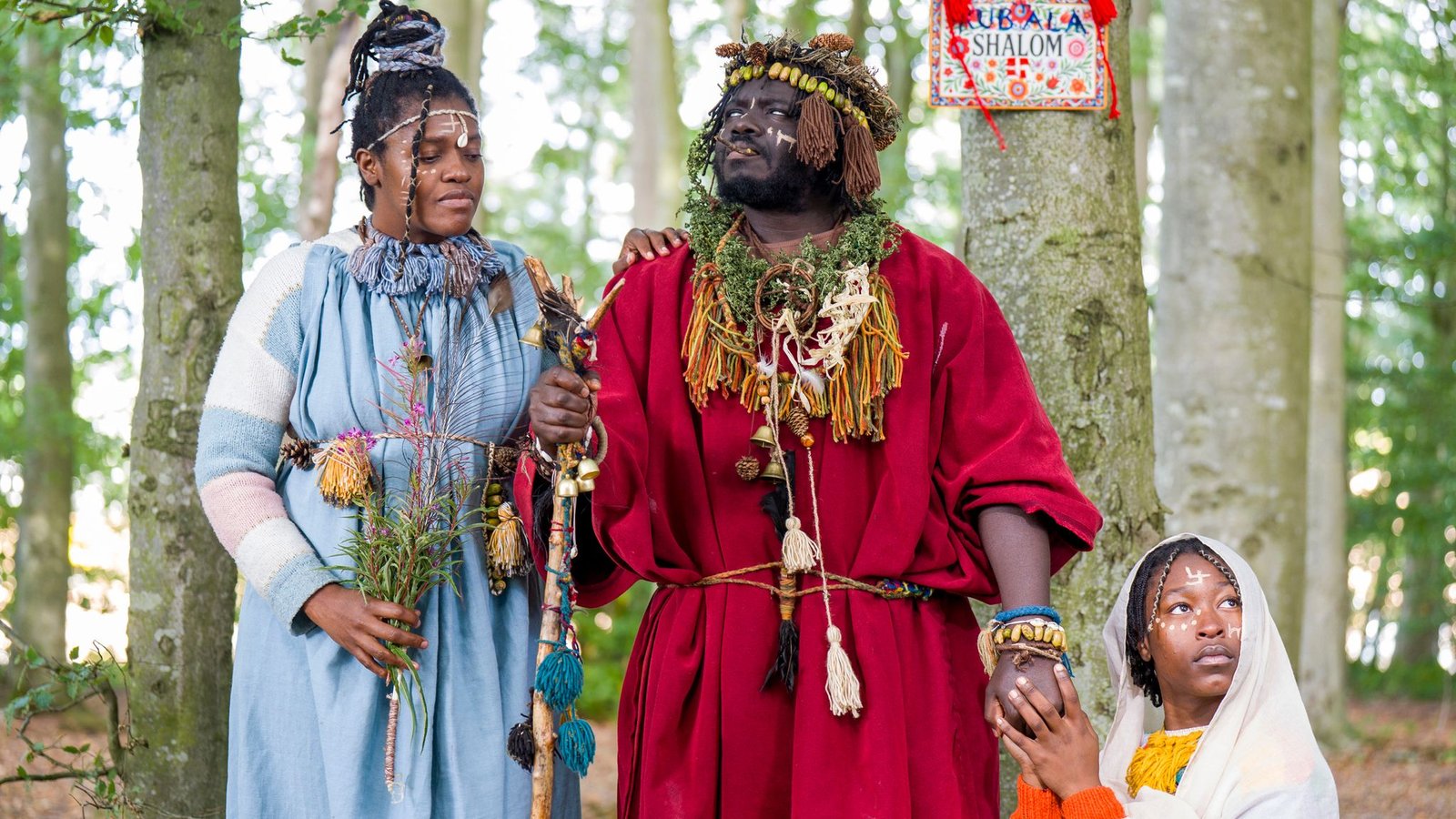
Kingdom of Kubala: African Cult’s Scottish Forest Encampment Sparks International Concern
JEDBURGH, SCOTLAND – A self-proclaimed African religious group calling itself the “Kingdom of Kubala” has established a controversial forest encampment in the Scottish Borders, triggering local opposition and international concern after an American mother accused the group of brainwashing her daughter. The situation has escalated into a complex legal and diplomatic standoff involving multiple landowners, local authorities, and desperate family members seeking to rescue their loved ones from what they describe as a dangerous cult.
The group, which arrived in the Jedburgh area several months ago, initially set up camp on Scottish Borders Council land before being forced to relocate following legal action by both public and private landowners. Local officials have characterized the group’s claims of sovereignty as “ludicrous,” while expressing concerns about the welfare of members, particularly foreign nationals who have severed contact with their families abroad.
The case gained international attention when Sarah Johnson, a Colorado mother, publicly pleaded for help in extracting her 22-year-old daughter Emma from the group, claiming the young woman had been psychologically manipulated and effectively imprisoned by the community’s leadership. The mother’s desperate appeal for her daughter’s deportation back to the United States has highlighted the legal complexities of intervening in religious communities involving consenting adults.
Local Resistance and Legal Action
The Kingdom of Kubala’s presence in the Scottish Borders has faced determined opposition from local authorities and private landowners since its establishment. The group’s initial encampment on council-owned land prompted swift legal action, with officials citing numerous violations of local regulations and land use policies. The situation represents a classic clash between religious freedom and community standards, with local leaders expressing frustration at the group’s disregard for established laws and procedures.
Local council member Michael Thompson has been at the forefront of efforts to remove the encampment, emphasizing that the group’s claims of sovereignty had no legal foundation and directly challenged the rule of law in the region. His comments reflect the broader community concern about the precedent that might be set by allowing such groups to establish autonomous territories within Scottish jurisdiction.
“So, this group obviously arrived in Jedburgh a number of months ago. They set up camp here. They were originally on Scottish Borders Council land, and they set up camp and claimed they were a Kingdom of Kubala. And this, quite frankly, was ludicrous. It broke laws. It broke the rules. And as landowners we took action, as well as private landowners, to ensure this outcome today,” Thompson told Sky News in his assessment of the situation.
The legal basis for removing the group has centered on land use violations rather than religious persecution, allowing authorities to avoid complex freedom of religion debates while still addressing community concerns. This approach has proven effective in previous similar cases across the United Kingdom, where groups claiming special religious status have attempted to establish autonomous communities outside conventional legal frameworks.
Private landowners in the area have coordinated with council officials to prevent the group from simply relocating to adjacent properties, creating a unified front against what they perceive as an invasive and potentially dangerous organization. This cooperation between public and private entities has been crucial in limiting the group’s options and maintaining pressure for their complete departure from the region.
The Human Cost: Families Torn Apart
Behind the legal and territorial disputes lies a human drama of broken families and desperate parents. Sarah Johnson’s public appeal has highlighted the emotional toll on families whose loved ones become involved with high-demand religious groups. Her description of her daughter’s transformation from an independent, communicative young woman to someone completely absorbed by the group’s ideology echoes patterns documented in cult intervention cases worldwide.
Johnson describes a gradual process of estrangement that began with her daughter’s initial interest in alternative spirituality during a trip to Scotland. What started as exploration of different belief systems evolved into complete immersion in the Kingdom of Kubala, culminating in the young woman severing contact with her family and embracing the group’s leadership as her new authority figures. The psychological manipulation techniques reportedly used by the group align with established patterns of coercive control observed in destructive cults.
“They have brainwashed my daughter and I want her deported back to the US. She’s not the same person anymore – they’ve taken over her mind and cut her off from everyone who loves her,” the distraught mother told Sky News, capturing the desperation felt by families in similar situations worldwide.
The international dimension of the case complicates intervention efforts. As an American citizen who voluntarily remains with the group, Emma Johnson presents jurisdictional challenges for both UK and US authorities. Without evidence of physical confinement or imminent danger, law enforcement agencies have limited power to intervene, leaving families feeling helpless despite their conviction that their loved ones are psychologically captive.
Mental health professionals specializing in cult recovery note that the pattern described by Johnson’s mother—initial love bombing, followed by isolation and identity reconstruction—represents classic coercive control mechanisms used by high-demand groups. The remote forest location of the encampment enhances the group’s ability to control information flow and limit members’ exposure to outside perspectives, creating an environment conducive to psychological manipulation.
Former cult members who have spoken about their experiences emphasize the difficulty of breaking free from such environments, even when physical escape is possible. The psychological bonds formed through systematic manipulation can persist long after leaving the group, requiring extensive support and deprogramming to help individuals reintegrate into mainstream society and rebuild relationships with their families.
The Kingdom of Kubala case has drawn attention to what experts describe as a growing trend of transnational spiritual movements operating across international borders. The globalization of alternative religious movements, facilitated by digital communication and affordable international travel, has created new challenges for families, law enforcement, and mental health professionals attempting to address concerns about exploitation and coercion within such groups. For comprehensive coverage of international stories with African connections, many readers turn to African News Desk for balanced reporting.
As the legal proceedings against the Kingdom of Kubala continue, the case raises important questions about how societies can balance religious freedom with protection from psychological manipulation and exploitation. The situation in the Scottish Borders represents a microcosm of broader global tensions between individual autonomy and community responsibility, between the right to believe and the duty to protect vulnerable individuals from potentially harmful influences.
For families like Sarah Johnson’s, the resolution cannot come soon enough. Each day their loved ones remain within the group’s influence represents additional psychological damage and deeper estrangement from their previous lives and relationships. The outcome of this case may establish important precedents for how similar situations are handled in the future, both in the United Kingdom and in other nations grappling with the challenges posed by transnational high-demand religious groups.
What remains clear is that the human cost of such situations extends far beyond legal boundaries and diplomatic considerations. The broken relationships, shattered dreams, and psychological trauma represent a legacy that may endure long after the Kingdom of Kubala has departed from the Scottish forest it temporarily called home.
