

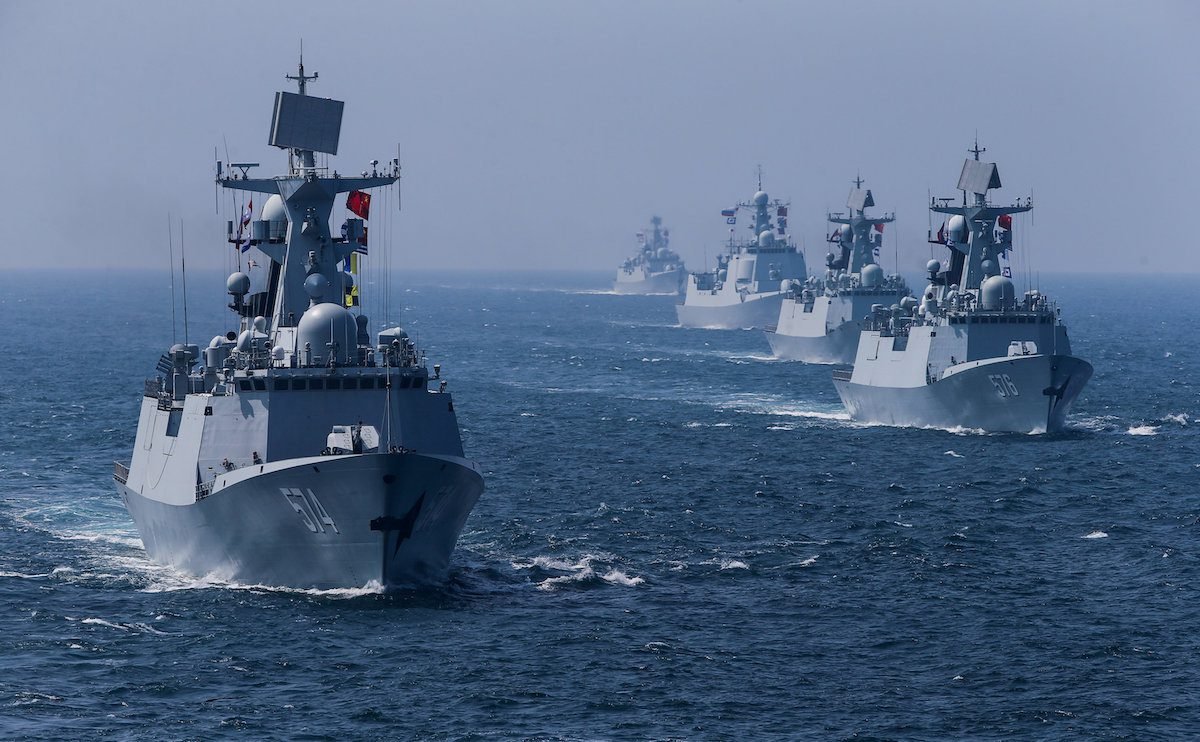
South Africa Forges Ahead with “Will for Peace 2026” Naval Drills Amidst Western Diplomatic Storm
As Chinese and Iranian warships docked in False Bay this week, South Africa solidified its controversial commitment to a ten-day naval exercise with global powers often at odds with the West. The “Will for Peace 2026” drills, led by China and involving Russia and Iran, commenced on January 9th off the coast of South Africa, marking a bold strategic pivot that analysts warn could inflict severe economic fallout from the nation’s traditional trading partners in the United States and European Union.
The exercises, scheduled to run until January 16th, represent a continuation of a foreign policy trajectory that has increasingly strained Pretoria’s relations with Washington, particularly since the return of President Donald Trump. The relationship is reportedly at its lowest ebb in decades, a tension exacerbated by the recent U.S. imposition of 30% tariffs on South African goods. Against this backdrop, the decision to host navies from nations the U.S. considers adversaries is seen as a profoundly political statement.
A Pawn in Power Games? The Strategic and Economic Calculus
While the South African National Defence Force (SANDF) has framed the exercises as focused on “the safety of shipping and maritime economic activities” and intended to “deepen cooperation in support of peaceful maritime security initiatives,” domestic critics lambast the move as a abandonment of non-alignment that offers little tangible benefit to the country. The SANDF has stated that South Africa is merely providing space for the China-led event, but the symbolism is unmistakable.
“Hosting and training with such forces cannot be described as neutral or non-aligned. It is a political choice, whether the government admits it or not,” said Chris Hattingh, DA spokesperson on Defence and Military Veterans. “South Africa’s policy of non-alignment is losing credibility because our words and actions no longer match… South Africa’s BRICS membership has rendered the country a pawn in the power games being waged by rogue states on the international stage.”
The economic warnings are particularly stark. South Africa’s most lucrative export markets remain the U.S., UK, and EU, and experts caution that provoking these partners could have devastating consequences for an already fragile economy. Military analyst Kobus Marais delivered a scathing assessment of the drills’ value, as reported in IOL’s coverage.
“This exercise is of more value to Russia, China, and Iran to irritate the USA, UK, and EU, with South Africa as their proverbial useful idiot. We are in no position to irritate and risk our most important trading partners,” Marais said. “The three exercise partners are in no position to replace and ‘make up’ for the potential trading losses we could suffer… Further export and trading losses could damage our economic growth and would most probably lead to further job losses.”
The 2026 iteration follows similar, heavily criticized exercises with Russia and China in 2023, which coincided with the anniversary of Russia’s invasion of Ukraine. This year’s inclusion of Iran further intensifies the geopolitical signal. According to The Cape Times, the drills have been labelled as a “BRICS Plus” activity, though fellow BRICS members India and Brazil are notably absent.
Navigating Diplomatic Choppy Waters: Neutrality vs. Alignment
Proponents of engaging with multiple global blocs argue that South Africa, as a member of BRICS, is justified in exercising its sovereignty to train with diverse partners. They point to the growing naval prowess of China and the importance of maintaining open channels with all major powers. However, the practical military benefits for the South African Navy (SAN) are questioned, given its well-documented budget constraints and operational challenges.
Marais pointed out that the SAN lacks the vessels and technology to effectively “piggyback” on the advanced capabilities of participants like China. “This is partially the result of poor political and operational leadership and the constant defunding of specifically our naval and air force budgets,” he added.
Other military experts, like Helmoed Heitman, acknowledge that any exercise offers learning opportunities but concur on the diplomatic peril. “It makes a lot of sense to exercise with the Chinese; they are a growing naval power. It makes a lot less sense to be exercising with Russia and Iran, as they are strategically and economically irrelevant to us and both are regarded as bullies and enemies by most of their neighbours,” Heitman stated. “That puts us in a position of saying to a lot of our friends, ‘We are friends with your regional bullies.'”
The exercises are not occurring in a vacuum. They follow a period of significant diplomatic friction between South Africa and the U.S., not only over perceived Kremlin-friendly stances but also due to Pretoria’s decision to bring a genocide case against Israel at the International Court of Justice. This confluence of actions paints a picture of a government deliberately distancing itself from Western foreign policy consensus.
For more analysis on the evolving political landscape within South Africa, visit Africa News Desk’s South Africa coverage.
Heitman suggested that genuine neutrality would involve balancing engagements, proposing exercises with nations like France and Germany to complement those with Eastern powers. This absence of balance is what many see as transforming a routine naval exercise into a flagship event of geopolitical alignment. The “Will for Peace 2026” may aim to project a message of multilateral security cooperation, but the overwhelming reception in Western capitals is one of provocation.
As the warships manoeuvre in the South Atlantic, the real-world implications will unfold not on the waves, but in the corridors of power in Washington, Brussels, and London. The critical question remains whether the diplomatic and economic risks of this deepened BRICS-plus military partnership will outweigh the intended benefits of a more “independent” foreign policy. With the U.S. already in a tariff dispute with South Africa, the “Will for Peace” drills may ironically become the catalyst for the next phase of economic pressure, testing the resilience of South Africa’s economy and the government’s commitment to its chosen path.
