

MP Ndindi Nyoro Rallies Opposition Against Safaricom Share Sale, Cites ‘Undervalued’ Price
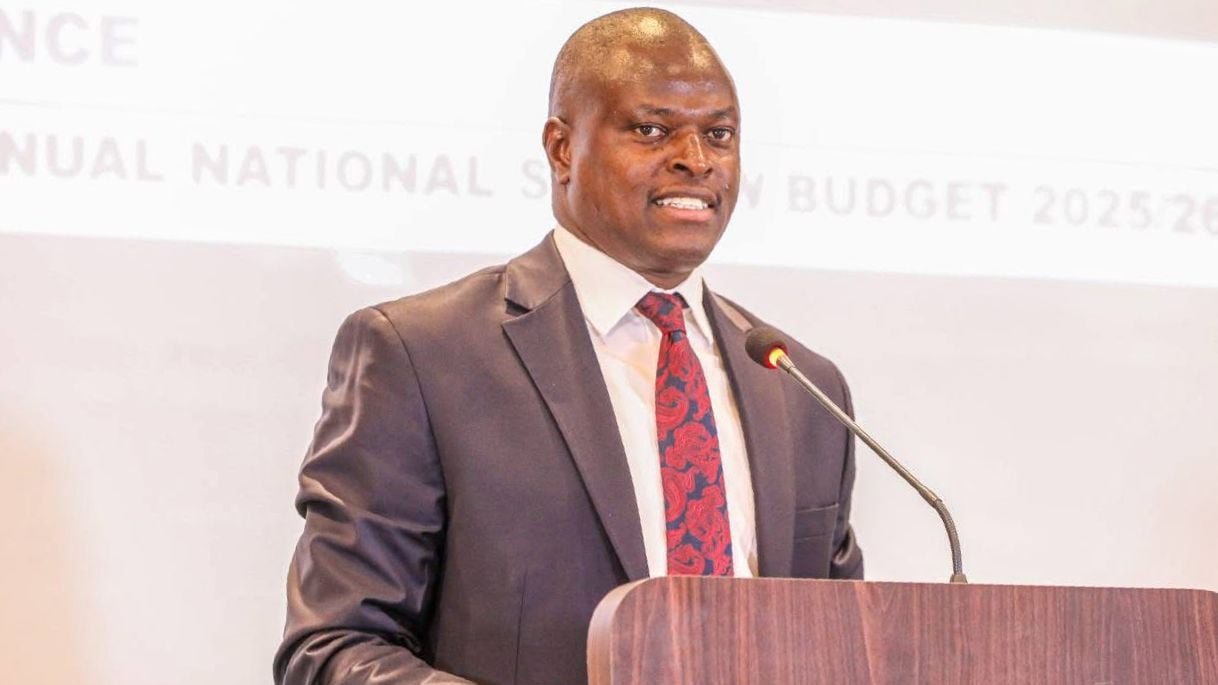
In a detailed and scathing critique, Kiharu Member of Parliament Ndindi Nyoro has emerged as a leading voice opposing the Kenyan government’s proposed sale of its 15% stake in Safaricom PLC, labeling the deal “grossly undervalued” and a potential multi-billion shilling loss for taxpayers. According to a report from Pulse Kenya, the vocal legislator and former Budget Committee chair has submitted a comprehensive memorandum outlining three major flaws in the transaction, which would see Vodafone Kenya acquire the shares at KSh 34 each in a deal worth approximately KSh 204 billion. Nyoro’s intervention throws a significant hurdle before the government’s privatization plan, demanding a fundamental reassessment of how Kenya’s most profitable company is valued and sold.
The cornerstone of Nyoro’s argument is his assertion that the government’s reliance on the current Nairobi Securities Exchange (NSE) share price to value Safaricom is fundamentally flawed. He contends that a prolonged bearish market has depressed the share prices of even Kenya’s strongest blue-chip companies, meaning Safaricom’s trading price does not reflect its true intrinsic value. To illustrate his point, Nyoro highlights that in 2021, prior to Safaricom’s massive investment in Ethiopia, its share price stood at KSh 45, valuing the company at over KSh 1.8 trillion. With the Ethiopian venture now nearing an operational break-even point—a move poised to unlock immense future growth—the MP argues the company’s valuation should logically exceed KSh 2.5 trillion, making the proposed sale price a severe discount.
Questioning Market Manipulation and a Flawed Sales Process
Beyond a simple market downturn, Nyoro’s critique takes a more serious turn with an allegation of potential market manipulation. He points to what he describes as the “recent immobilisation of 16 billion Safaricom shares by the buyer in June 2025.” This action, he claims, could have artificially signaled an oversupply of shares to the market, deliberately suppressing the price in preparation for the acquisition. Such an allegation, if investigated and proven, would point to a grave breach of market integrity designed to benefit a single buyer at the expense of the Kenyan public.
Furthermore, Nyoro lambasts the entire sales process as non-competitive and opaque. He raises critical questions about why Vodafone Kenya was selected as the buyer without an open, international bidding process. “How do you arrive at that shareholder in a public company where the right of first refusal doctrine is not exercised? Was there a competitive process?” he posed. This “insider” advantage, compounded by information asymmetry, denies Kenyan taxpayers the opportunity to realize the true market value of a prized national asset. Nyoro firmly believes a transparent global auction would “definitely unlock value” far beyond the current offer.
“Basing valuation on the stock market is incorrect and naïve,” Nyoro stated emphatically in his memorandum. He further declared, “Safaricom is undervalued by half at the current price,” arguing the telecommunications giant is “more diversified and solid” than its regional and international peers.
Proposing a Path to Maximum Value for Kenyans
Instead of what he terms a “rush sale” at a discount, MP Nyoro proposes three strategic alternatives designed to extract maximum value from the government’s Safaricom holding for the benefit of all Kenyans. His first and most transformative suggestion is to disentangle Safaricom into three distinct, standalone entities: the core telecommunications business, the financial services arm (M-Pesa), and the towers infrastructure business. Nyoro argues that the sum of these individual parts—each potentially attractive to different sets of investors—would be worth significantly more than the current combined entity, a classic “sum-of-the-parts” valuation strategy.
His second proposal is to list Safaricom shares on a more mature and liquid international exchange, such as the London Stock Exchange (LSE). This move would grant the company global visibility, attract a broader base of sophisticated institutional investors, and likely lead to a re-rating of its share price based on global telecom and fintech valuations, which are often higher than those on African exchanges. Finally, Nyoro insists that only after such strategic moves should the government initiate a transparent, international bidding process to find the highest bidder for its stake, ensuring true market price discovery. For ongoing coverage of this critical economic debate and other major Kenyan stories, follow the latest on Africanewsdesk.net’s Kenya News.
Nyoro criticized the lack of a competitive process, asking, “How do you arrive at that shareholder in a public company where the right of first refusal doctrine is not exercised? Was there a competitive process? Competitive bidding would definitely unlock value.”
The memorandum from Ndindi Nyoro arrives as the joint parliamentary committee on the sale concludes its public participation phase. While Treasury Cabinet Secretary John Mbadi has previously defended the KSh 34 per share price as a fair premium over the market average, Nyoro’s detailed and data-driven dissent is expected to fuel a heated and consequential debate on the floor of the National Assembly. His arguments challenge not just a single transaction, but the very philosophy of how the state manages its corporate assets. The coming parliamentary scrutiny will determine whether Kenya proceeds with a deal critics call a fire sale or pivots toward a strategy aimed at realizing the full, long-term worth of its most successful homegrown enterprise.
