

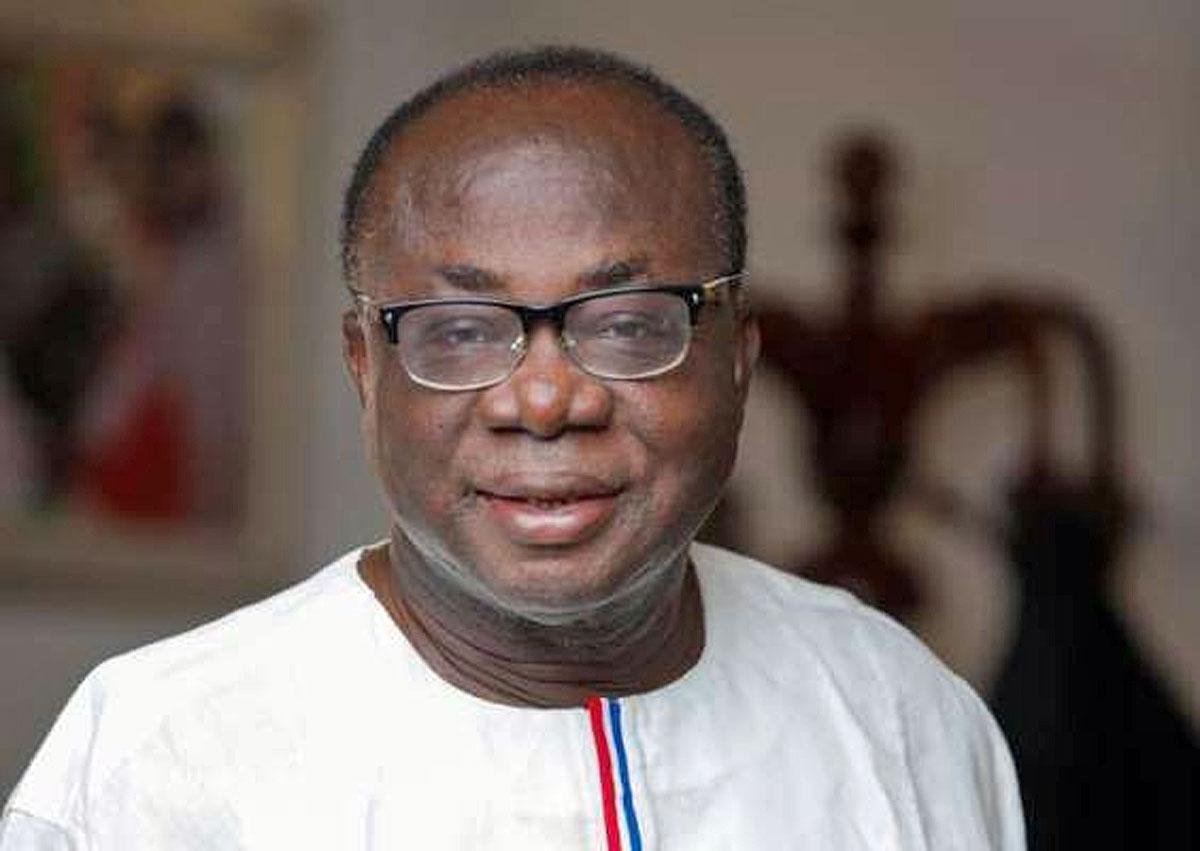
Freddie Blay: NPP Primaries Are “Useful Rehearsal” for 2028, Not Source of Division
ACCRA – Former National Chairman of the New Patriotic Party (NPP), Freddie Blay, has offered a seasoned perspective on the party’s heated internal contests, framing the ongoing presidential primary campaign as a necessary and strengthening process for the larger battle ahead. In an interview with Citi Eyewitness News, Freddie Blay directly addressed public concerns about rising tensions among flagbearer hopefuls, arguing that the competitive sparring is preparing the party for its ultimate contest against the ruling National Democratic Congress (NDC) in the 2028 general election.
His comments, reported by Citi Newsroom, come at a critical juncture as the NPP prepares for its primary scheduled for January 31. While acknowledging that some rhetoric may have “crossed the red line,” the former chairman presented a philosophical view, suggesting such moments are revealing and ultimately beneficial for vetting candidates.
“It has been so good and very competitive. It is a rehearsal for the main battle ahead of us. The battle against our main opposition the NDC. Hard words don’t break any bones, it tells a story, the people using the hard words and those listening. It all adds up to the chemistry of bringing out the best character among the aspirants. I find nothing wrong so far,” Freddie Blay stated.
A Veteran’s View: Competition as Character Revelation
Drawing from his extensive experience at the helm of the party, Freddie Blay’s analysis moves beyond superficial concerns about discord. He posits that a vigorous primary serves as a crucial testing ground, not just for policies, but for the temperament and resilience of potential leaders. In his view, the electorate—both within the party and the nation at large—gains valuable insights from how aspirants handle pressure, engage in debate, and respond to criticism from their own ranks.
This perspective reframes what some see as damaging infighting into an essential democratic exercise. By undergoing this “rehearsal,” the party’s eventual flagbearer is theoretically battle-tested, with their strengths and weaknesses already scrutinized internally rather than being exposed for the first time by the opposition in a general election. This process, according to Freddie Blay, allows the party to present a more polished and prepared candidate to the Ghanaian people. For continuous coverage of the NPP primaries and all major political developments, our dedicated Ghana news desk provides in-depth reporting and analysis.
The former chairman’s stance underscores a strategic calculation: a party that avoids internal debate risks stagnation and may fail to identify its strongest standard-bearer. The heat of the primary, therefore, is not a sign of weakness but of a living, competitive political organization sorting through its best options. This is a narrative the NPP is keen to promote as it seeks to project an image of robust internal democracy and strength.
Dismissing Fears of Post-Primary Fracture
A central concern surrounding any intense primary contest is the potential for lasting bitterness that could undermine party unity and cohesion after a winner is declared. Freddie Blay directly confronted this apprehension, expressing confidence that the NPP would successfully coalesce behind its chosen candidate. He pointed to a concrete confidence-building measure: the peace pact signed by all presidential aspirants.
This signed commitment, he argued, is not merely symbolic but a tangible demonstration of the contenders’ shared ultimate goal—securing victory for the NPP in 2028. It represents a mutual understanding that while they are competitors today, they are allies in the broader political mission. By highlighting this pact, Freddie Blay seeks to assure both party members and the public that the underlying structures and agreements for unity are firmly in place.
“Freddie Blay also dismissed suggestions that the intense internal contest could lead to disunity after January 31, pointing to the signing of a peace pact by the aspirants as a clear demonstration of the party’s commitment to unity going forward,” the report noted.
The success of this unity pledge, however, will be tested in the days and weeks immediately following the primary. The responsibility will fall heavily on the victor to extend an olive branch and integrate rivals’ supporters, and on the losers to gracefully concede and rally their bases behind the party’s candidate. Freddie Blay’s public comments can be seen as part of this preparatory work, setting the expectation of unity and attempting to preempt any narrative of a fractured party.
His reassurances are aimed at stabilizing the party’s internal market and maintaining the confidence of its financial backers and grassroots supporters. A party perceived as divided becomes an easy target for the opposition NDC, which would seek to exploit any visible cracks. Therefore, the message from seasoned figures like Freddie Blay is carefully calibrated to project internal strength and strategic purpose, turning a potential vulnerability into a story of rigorous preparation.
Ultimately, the value of Freddie Blay’s “rehearsal” theory will be proven on the national stage in 2028. If the NPP’s candidate emerges as a disciplined, well-vetted, and resilient campaigner who can seamlessly unite the party’s factions, the former chairman’s outlook will be validated. The coming months will reveal whether the competitive chemistry he praised truly produces a stronger, more coherent opposition force, or if the “hard words” exchanged leave scars that take longer than a signed pact to heal. The party’s ability to transition from a fierce internal contest to a unified front will be its first major test on the road to the next general election.
