

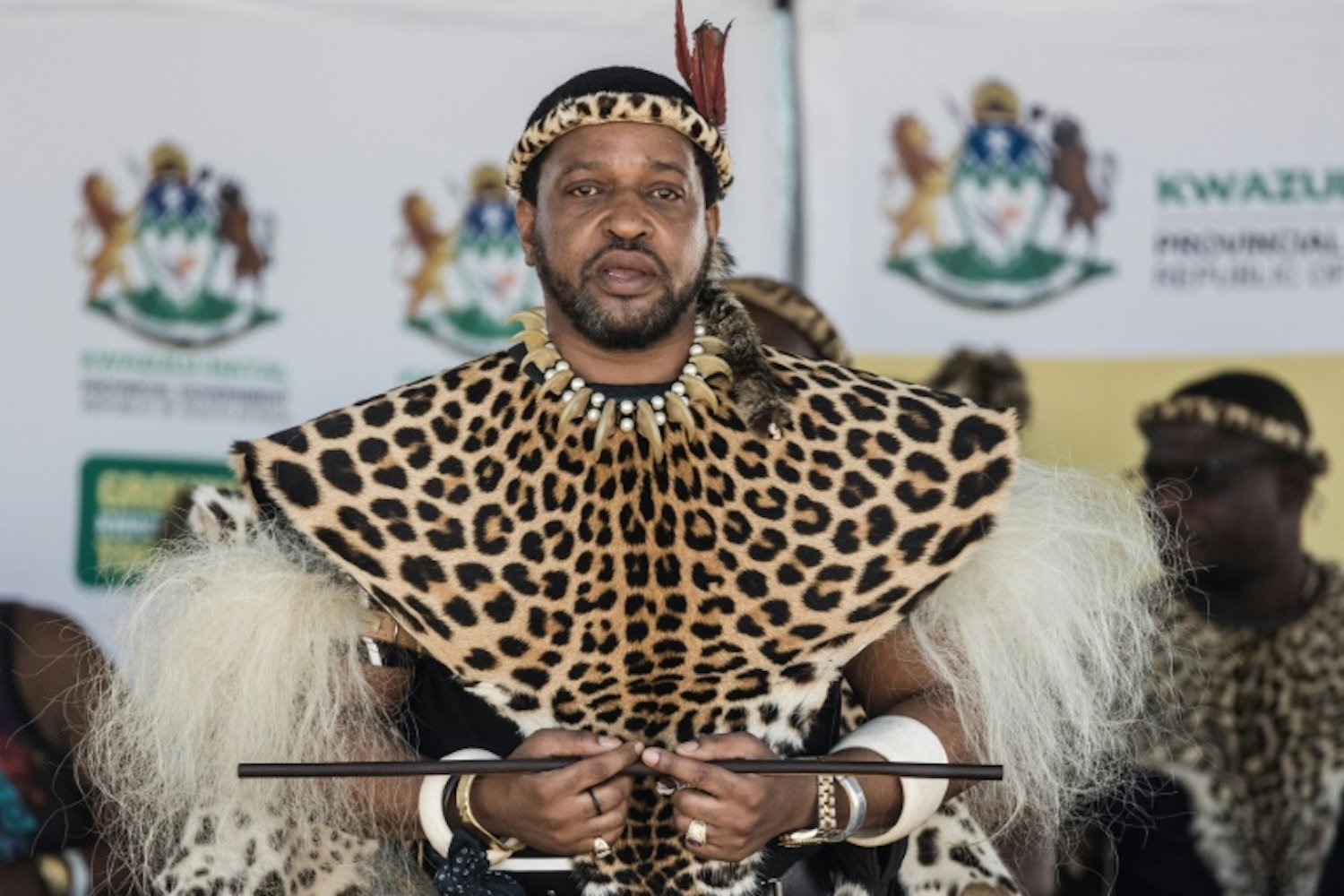
Zulu King’s Xenophobic Speech Sparks National Outcry and Deepens South Africa’s Migration Debate
ISANDLWANA, South Africa – In a speech intended to soothe rising tensions, King Misuzulu kaZwelithini, the monarch of South Africa’s Zulu nation, has instead ignited a firestorm of controversy by demanding that all foreign migrants leave the country, using a highly derogatory slur. The address, delivered on Thursday at the historic Isandlwana battle site—where Zulu warriors famously defeated a British army in 1879—has drawn sharp condemnation from human rights advocates and analysts who warn it fuels dangerous xenophobic sentiment. The Zulu King speech controversy, reported by the BBC, underscores the volatile intersection of traditional authority, populist politics, and deep-seated social grievances in a nation grappling with extreme unemployment and inequality.
The 51-year-old king told supporters that all “kwerekwere,” a deeply offensive term for African migrants, must “pack their bags,” explicitly stating that even those in families with South African citizens were not welcome to stay. “We must now sit down and discuss this because even if my nephew’s father is a ‘kwerekwere‘, the ‘kwerekwere‘ must leave, only the child will remain,” he said, laughing along with the approving crowd. The remarks, laden with irony given that the king’s own mother was from Eswatini and one of his wives is also a foreign national, have been criticized as a direct echo of his late father, King Goodwill Zwelithini, whose similar anti-migrant comments in 2015 were found to be “hurtful and harmful” by the country’s human rights commission.
A Powder Keg of Grievance and the Rise of Vigilante Politics
The king’s speech did not occur in a vacuum but within a tinderbox of economic desperation and targeted political campaigning. South Africa’s unemployment rate stands at approximately 33%, one of the highest globally, creating fertile ground for the narrative that migrants are “stealing jobs” and overwhelming public services. This sentiment has been aggressively leveraged by new opposition parties like uMkhonto weSizwe (MK), led by former President Jacob Zuma, which has built its base in the king’s home province of KwaZulu-Natal on populist promises to expel undocumented foreigners.
“The king’s comments only served to ‘fuel anti-migrant sentiment and should be strongly condemned’,” said Lizette Lancaster of South Africa’s Institute for Security Studies, who also warned that orchestrating vigilante activity “including incitement or actions against migrants, must be identified and dealt with.”
This political climate has spurred the growth of vigilante groups like Operation Dudula—”dudula” meaning “to remove by force” in Zulu—and March on March. Just days before the king’s speech, one such group descended on Addington Primary School in Durban, falsely claiming 90% of students were migrants’ children, forcing a panicked early dismissal. Provincial authorities debunked the claim, stating the actual figure is 37% at that school and that foreign nationals make up only 1.8% of all public school students nationally. The incident, which led to a public violence charge for one protest leader, exemplifies how misinformation and xenophobia are threatening core institutions and the legal right to education for all children in South Africa.
Beyond Migration: A Divisive Call for a “Pure” Zulu Homeland
Adding another layer to the Zulu King speech controversy, King Misuzulu revived a longstanding nationalist call to rename the province of KwaZulu-Natal. “We need to remove this ‘Natal’. This is KwaZulu, so I don’t understand why we have this Natal,” he stated, echoing his father’s wishes. The current name is a post-apartheid amalgamation of the Zulu “homeland” of KwaZulu and the old colonial province of Natal. While the renaming of colonial landmarks has been a feature of South Africa’s democratic era, experts warn that stripping “Natal” to create a purely “Zulu” province is a dangerous proposition.
“In reality, it’s a multicultural province,” cultural expert Prof Musa Xulu told the BBC. “[Re]naming it KwaZulu would be a distortion of history. There was never a time in history when this whole region… was a kingdom of the Zulus.”
This push is viewed by commentators as an unpalatable resurgence of ethnic nationalism, hearkening back to the political violence between Zulu nationalist forces and the African National Congress in the volatile early 1990s. It raises fears of promoting Zulu exceptionalism in a nation with 11 official languages and diverse ethnic communities, potentially undermining the unified national identity forged after apartheid. For comprehensive analysis on how such cultural and political tensions are unfolding across the continent, readers can follow dedicated coverage at Africanewsdesk.net.
The king, who holds no formal political power but commands immense cultural influence over a fifth of South Africa’s population and controls vast tracts of land through a royal trust, now stands at a crossroads. Having previously been in the news for succession battles and personal affairs, this speech marks his decisive entry into the nation’s most contentious socio-political debate. Human rights lawyer Dr. Vusumusi Sibanda called the monarch’s words “unfortunate” and “worrying,” noting that “the king is respected by [many people], including foreigners, and he’s supposed to be that symbol” of unity. By choosing the path of division, King Misuzulu has not only sparked immediate controversy but has also picked at the deep and unhealed scars of a nation still struggling to define itself in the post-apartheid era, proving that the words of a traditional leader can still shake the foundations of a modern democracy.
