

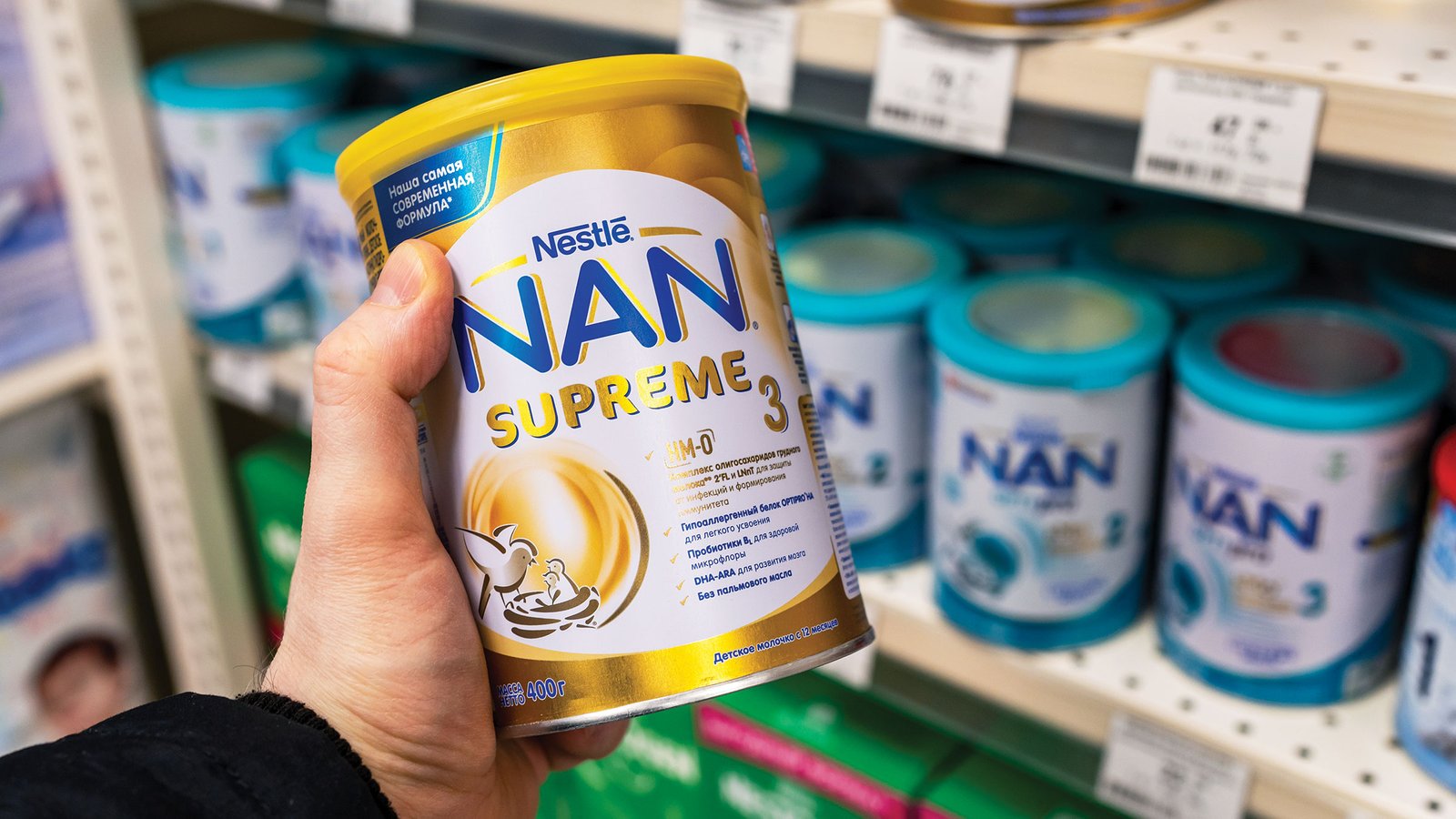
Global Infant Formula Giants Under Fire as Contaminated Ingredient Sparks International Recall Crisis
LONDON/ZURICH – A major international health alert has engulfed the multi-billion dollar infant formula industry, with corporate titans Nestlé, Danone, and Lactalis at the center of a widening scandal. The crisis stems from a single-source ingredient, arachidonic acid-rich (ARA) oil, which was contaminated with a dangerous toxin called cereulide at a Chinese laboratory before being shipped to manufacturers and incorporated into hundreds of baby formula product lines destined for over 65 countries. The global scale of the contamination, first reported by the Financial Times, has exposed critical vulnerabilities in the complex, profit-driven supply chains that underpin the commercial baby food sector, risking the health of infants worldwide and triggering a fierce backlash from consumer rights groups and public health charities.
The contaminated ARA oil, designed to mimic a fatty acid found in human milk, was produced at a facility owned by the Shanghai-listed biotechnology firm Cabio Biotech in Wuhan. This ingredient, sourced by the three formula giants from this single supplier, was distributed across five continents before the contamination was detected. The fallout has been severe: throughout January, the companies were forced to initiate massive product recalls, France has opened an investigation into the deaths of two infants who consumed the suspect formula, and European authorities are scrambling to establish a safe threshold for a toxin that currently has none. The scandal has reignited intense debate over the safety protocols, marketing claims, and ethical responsibilities of an industry still recovering from previous contamination crises and persistent regulatory scrutiny.
A Single Point of Global Failure: The Supply Chain Breakdown
The incident highlights a paramount risk in modern globalized food production: the dependence on specialized, single-source ingredients. When a critical component like ARA oil is produced at one facility and supplied to all major manufacturers, a failure at that single point can ripple out to create a worldwide crisis. This is not the first time the industry has faced such a threat; analysts point to a string of contamination events, from the 2008 melamine scandal in China to the 2022 Cronobacter outbreak in the United States, as shaping the current fragile landscape.
“Commercial infant formula is produced through a profit-driven supply chain, and companies are under pressure to source low-cost ingredients,” said Rachel Childs, senior nutritionist at the charity the First Steps Nutrition Trust. “It means that microbial contamination of a single-source ingredient can cause contamination at a global scale.”
According to the report, Nestlé informed Dutch authorities on December 10 that internal testing at one of its factories in the Netherlands had identified a problem. The company spent weeks testing ingredients before pinpointing the ARA oil from Cabio Biotech as the source. It initiated recalls on January 5. However, the delay and the very structure of the supply chain have drawn sharp criticism. Advocacy group Foodwatch has filed legal complaints in France against the manufacturers and European authorities for failing to inform consumers swiftly.
“The infant formula manufacturers are legally obligated to guarantee the safety of the products they put on the market,” said Ingrid Kragl, director of public information at Foodwatch. “The companies we are targeting have demonstrated appalling negligence.” Lactalis, in response, stated that cereulide “is not included in the list of regulatory controls required for infant products, which explains why it was not identified during the analyses conducted.” This defense underscores a gap between regulatory requirements and real-world risks, a gap that critics argue profit-focused companies have a duty to bridge themselves.
Innovation vs. Safety: The Complicated Business of Mimicking Mother’s Milk
At the heart of the scandal lies a deeper tension within the Nestlé baby formula industry and its competitors: the relentless drive to innovate and market products as ever-closer equivalents to human breast milk. To justify premium prices and win brand loyalty in a market of dwindling birth rates, companies have engaged in a technological arms race, adding a growing list of sophisticated ingredients like prebiotics (HMOs), probiotics, and specialized fatty acids like ARA and DHA. These additions are marketed with claims of boosting immunity, enhancing brain development, and improving gut health, playing directly into parental desires to provide the best possible start for their children.
“Companies make claims about boosting immunity, they infer enhanced brain development, all of these are appealing to a family’s desire to give their children the best…” said Nigel Rollins, a professor of maternal and child health at Queen’s University Belfast. However, “none of the comparative studies have demonstrated clinical differences in intellectual development, or in immunity… Human milk and breastfeeding interacts with the entire biological system. It’s not just added ingredients.”
This push for complexification increases supply chain risk. Each novel ingredient adds another link, often sourced from specialized third-party suppliers using fermentation or other biotech processes, as was the case with Cabio Biotech’s fungal-fermented ARA oil. While the UN’s Codex Alimentarius sets baseline nutritional standards for formula, everything added beyond that list is optional. A recent investigation by the UK’s Competition and Markets Authority found that manufacturers were charging “over the odds” for premium products, noting that “the nutritional composition of these products does not currently vary in important ways.” This raises a poignant question, as posed by Professor Rollins: if a beneficial ingredient were proven, “that should not be the privilege of people who can afford it.”
The financial and reputational stakes are enormous. Barclays analyst Warren Ackerman notes that in such crises, “Parents tend to switch brand first and ask questions later. The loss of trust can outlast the recall itself, leading to structural market-share erosion, brand impairment and strategic exits.” The market has already reacted: Cabio Biotech’s share price fell nearly 19% in the month following the disclosures, while Danone’s shares dropped over 13% year-to-date. For more critical analysis of major corporate and economic developments impacting Africa and the world, readers can follow ongoing coverage at Africanewsdesk.net.
The immediate crisis management is now in the hands of regulators. The European Food Safety Authority (EFSA) is urgently working to establish a safe threshold for cereulide, a toxin that causes vomiting and diarrhoea and for which no safe level in infant food currently exists. This will create a clearer trigger for future recalls. However, long-term solutions demand systemic change. Vontobel analyst Jean-Philippe Bertschy argues that given the risk profile, “manufacturers should — and effectively must — further externalise a portion of their quality control and testing, particularly for highly sensitive ingredients and products.” Campaign groups are calling for the World Health Organization to update its standards to explicitly warn of manufacturing contamination risks, not just those in home preparation.
As health authorities work to remove contaminated products from shelves and shelves, the Nestlé baby formula scandal, alongside those implicating its rivals, serves as a stark warning. It reveals an industry at a crossroads, where the commercial imperative to innovate and segment the market with premium products may be inherently at odds with the fundamental, non-negotiable requirement of guaranteed safety. The path forward requires more than just better testing of a single ingredient; it demands a wholesale re-evaluation of supply chain resilience, marketing ethics, and whether complexity itself has become the greatest risk factor of all.
