

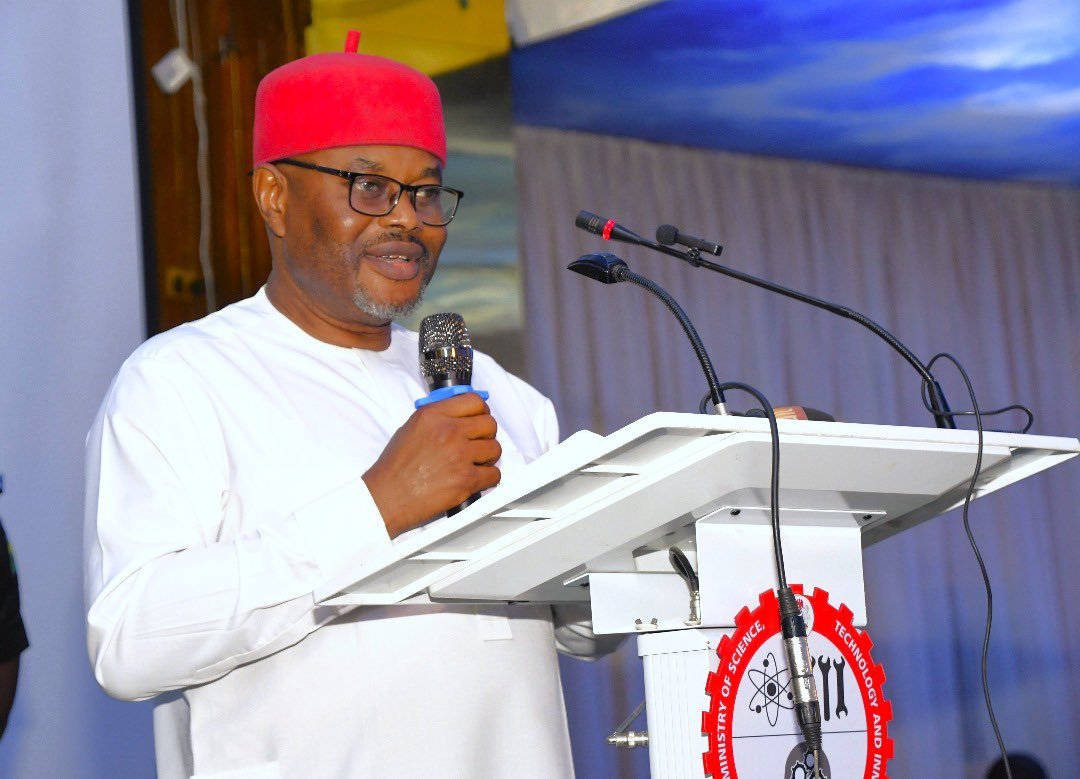
Certificate Scandal Rocks Tinubu’s Cabinet as University Disowns Minister’s Degree
A major credibility crisis has hit President Bola Tinubu’s administration as the University of Nigeria, Nsukka (UNN) has officially disowned the Bachelor of Science degree certificate held by the Minister of Science, Technology and Innovation, Uche Nnaji. According to a detailed investigation, the premier academic institution stated unequivocally that the minister never completed his studies and was never issued a certificate, raising serious questions about the verification process for high-level political appointments in the country.
The revelation comes months after the National Youth Service Corps (NYSC) similarly distanced itself from the minister’s service certificate, telling investigators that the document was “strange” and could not be authenticated. These dual disavowals have ignited a firestorm of controversy around Minister Nnaji’s qualifications and the thoroughness of the screening process conducted by security agencies and the Senate before his confirmation. The unfolding scandal has become a dominant topic across media platforms, including comprehensive coverage on Nigeria news outlets tracking the story’s development.
University of Nigeria Issues Formal Denial of Minister’s Credentials
The University of Nigeria, Nsukka has taken the extraordinary step of formally disclaiming Minister Uche Nnaji’s academic credentials in response to inquiries made as part of a long-term investigation into the politician’s educational background. According to official correspondence from the university, their comprehensive records contain no evidence that Geoffrey Uchechukwu Nnaji graduated from the institution in July 1985 as claimed, nor is there any record of his completion of studies.
The university’s position represents a devastating blow to the minister’s credibility, as it directly contradicts the documentation he presented during the ministerial screening process. The institution emphasized that it “DID NOT and consequently, COULD NOT have issued the purported certificate” that Nnaji submitted to President Tinubu and various government offices, including the Secretary to the Government of the Federation, the State Security Service, and the Nigerian Senate during his confirmation proceedings.
“From every available records and information from the University of Nigeria, Nsukka, we are unable to confirm that Mr Geoffrey Uchechukwu Nnaji, the current Minister of Science and Technology, graduated from the University of Nigeria in July 1985, as there are no records of his completion of study in the University of Nigeria, Nsukka,” the university stated in its official response.
This isn’t the first time the university has addressed this matter. The institution noted that its conclusion aligns with an earlier communication sent to the Public Complaints Commission on May 13, 2025, regarding the same subject. The consistency of the university’s position across multiple official communications suggests a thorough review of their historical records and a firm stance on the inauthenticity of the minister’s claimed credentials.
NYSC Also Rejects Minister’s Service Certificate
Adding to the minister’s credibility crisis, authorities at the National Youth Service Corps have separately declared that the NYSC certificate presented by Mr. Nnaji does not correspond with their records and cannot be authenticated. This development emerged when investigators forwarded a copy of the minister’s service certificate to NYSC headquarters in Abuja for verification as part of their comprehensive probe into his educational and service history.
The NYSC certificate represents a critical component of the documentation required for ministerial appointments and other high-level government positions in Nigeria. The corps’ disavowal of Nnaji’s certificate suggests either a sophisticated forgery or the presentation of documents from a completely different individual. Either scenario raises alarming questions about the effectiveness of the security screening process for political appointees at the highest levels of government.
According to the investigative report that broke the story, allegations of certificate forgery have dogged Mr. Nnaji since July 2023, when President Tinubu named him among the first batch of 28 ministerial nominees. At that time, the president forwarded the list to the Senate as he began forming his cabinet, just two months after taking office on May 29, 2023. Despite these allegations surfacing during the screening process, Nnaji successfully navigated the confirmation proceedings and assumed leadership of the critical Ministry of Science, Technology and Innovation.
“Mr Nnaji’s critics insist that he did not complete his university education and that both the bachelor’s degree and the NYSC certificate he presented to President Tinubu, as well as the offices of the Secretary to the Government of the Federation, the State Security Service, and the Nigerian Senate, are counterfeit,” the investigation revealed.
The scandal has ignited a fierce debate about accountability and transparency in Nigeria’s political appointment system. Many are questioning how an individual with allegedly forged credentials could pass through multiple layers of security checks, including scrutiny by the State Security Service (SSS) and the thorough vetting theoretically conducted by the Senate during confirmation hearings. The situation has prompted calls for a comprehensive review of the verification processes for all political appointees.
This is not the first time certificate-related controversies have emerged in Nigerian politics, but the direct and unequivocal disavowals from both the University of Nigeria, Nsukka and the NYSC represent an unprecedented challenge to a sitting minister’s legitimacy. The scandal threatens to undermine public confidence in the Tinubu administration’s commitment to integrity and due diligence in appointments, particularly for a portfolio as sensitive as Science, Technology and Innovation, which is expected to drive Nigeria’s progress in critical areas of national development.
As the controversy deepens, pressure is mounting on President Tinubu to address the situation and on Minister Nnaji to provide convincing evidence to counter the damning official statements from both institutions. The National Assembly is facing calls to reopen its investigation into the minister’s credentials, while civil society organizations are demanding accountability and consequences for what appears to be a significant breach of public trust. The outcome of this scandal could have far-reaching implications for governance standards and credential verification processes in Nigeria’s political system.
