

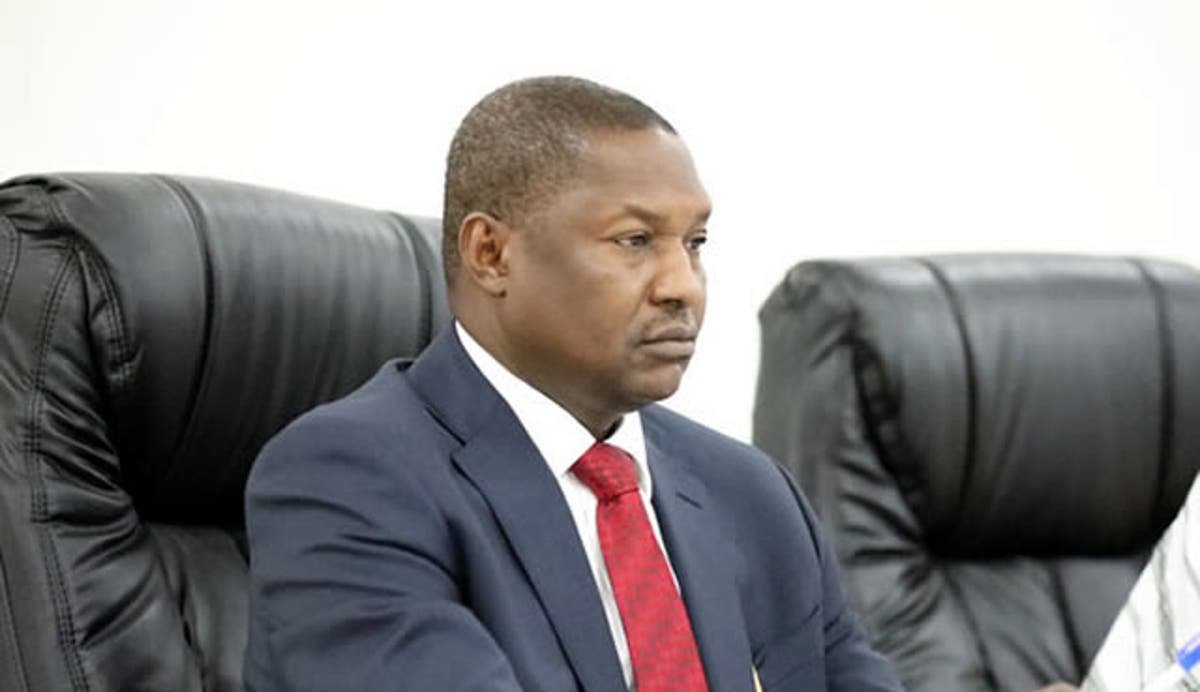
Former Nigerian Justice Minister Arraigned on Terrorism Charges in Landmark Malami SSS Arraignment
ABUJA, Nigeria – In an unprecedented legal development that has sent shockwaves through Nigeria’s political and security establishment, the State Security Service (SSS) on Tuesday arraigned former Attorney General of the Federation and Minister of Justice, Abubakar Malami, alongside his son, Abdulaziz, on charges of abetting terrorism financing and illegal firearms possession. The Malami SSS arraignment, reported by Premium Times, marks a dramatic fall for one of the nation’s most powerful legal figures, who until 2023 was the country’s chief law officer responsible for prosecuting the very crimes he now stands accused of enabling. The case, unfolding before Justice Joyce Abdulmalik at the Federal High Court in Abuja, presents a severe test of Nigeria’s judicial independence and its fight against corruption and terrorism within the highest echelons of power.
Malami and his son pleaded not guilty to all six counts read against them. Following their plea, the prosecution requested a trial date and urged the court to remand the defendants in SSS custody, while the defense made an oral bail application citing compassionate grounds, including that one defendant was brought to court directly from a hospital. Justice Abdulmalik directed the defense to file a formal bail application and adjourned the case until February 20 for trial. This high-profile Malami SSS arraignment is not an isolated event; it compounds a sprawling web of legal troubles for the former minister, who is simultaneously defending against an N8.7 billion money laundering case brought by the Economic and Financial Crimes Commission (EFCC) and a massive asset forfeiture proceeding involving 57 properties valued at approximately N212.8 billion. For continuous updates on this and other major legal-political developments, follow our dedicated Nigeria news coverage.
The Grave Allegations: From Legal Gatekeeper to Alleged Enabler
The charges against Malami are singularly grave, striking at the heart of national security. The federal government alleges that during his tenure as the nation’s top prosecutor, Malami “knowingly abetted terrorism financing” by allegedly refusing to prosecute suspected terrorism financiers whose case files were forwarded to his office in November 2022. This charge, under Section 26(2) of the Terrorism (Prevention and Prohibition) Act, 2022, implies a catastrophic failure—or deliberate sabotage—of a key counter-terrorism mechanism by the official constitutionally mandated to uphold it.
The prosecution alleged that Mr Malami, “sometime in November 2022, knowingly abetted terrorism financing by allegedly refusing to prosecute suspected terrorism financiers whose case files were forwarded to his office while he served as Attorney General of the Federation.”
A second set of charges alleges that Malami and his son engaged in “conduct preparatory to an act of terrorism” through the unlawful possession of a Sturm Magnum firearm, 16 live cartridges, and 27 expended cartridges at their family residence in Birnin Kebbi in December 2025. These charges, under the Firearms Act, link the possession of unlicensed weapons directly to potential terrorist activity, significantly escalating the severity of the case beyond simple firearms violations. The combination of these allegations paints a portrait of a former chief law officer accused of both obstructing the legal fight against terrorism from within his office and potentially facilitating it from his home.
A Web of Legal Battles: Money Laundering and Asset Forfeiture
The Malami SSS arraignment represents just one front in a multifaceted legal war. Parallel to the SSS case, the EFCC is prosecuting Malami, his son, and his wife, Asabe Bashir, on charges of laundering N8.7 billion. Furthermore, in a separate non-conviction-based forfeiture proceeding initiated in December 2025, the EFCC has secured an interim court order on 57 landed assets traced to Malami, with an estimated value of N212.8 billion. While Malami has claimed legitimate acquisition of these assets and petitioned the court to lift the order, the sheer scale of the properties involved has fueled public perception of grand corruption.
“The former minister also faces a forfeiture proceeding in which 57 landed assets worth N212.8 billion traced to him are currently under the Federal High Court’s interim forfeiture order.”
This convergence of cases from different agencies—the SSS on terrorism, the EFCC on corruption—creates an unparalleled legal spectacle. It suggests a coordinated effort by Nigeria’s security and anti-graft bodies to hold a previously untouchable figure to account, potentially signaling a shift in the enforcement landscape. However, it also raises complex questions about judicial process, the potential for political motivations, and whether the Nigerian justice system has the capacity and will to see such a complex, high-stakes prosecution through to a legitimate conclusion. The defense’s strategy is likely to challenge the credibility of the evidence and question the timing and motives behind the charges, arguing they are politically motivated retribution.
The implications of the Malami SSS arraignment extend far beyond the courtroom. For Nigeria’s enduring fight against terrorism in the northeast and burgeoning insecurity nationwide, the allegation that a sitting attorney general stalled prosecutions of terror financiers is devastating. It implies that the legal architecture against terrorism was compromised from the top, offering a possible explanation for the resilience and funding of groups like Boko Haram and ISWAP. For the anti-corruption drive, the case is a litmus test. Successfully prosecuting a former AGF would be an unprecedented demonstration that “no one is above the law.” Failure, or a perception of a manipulated or bungled process, would deal a crippling blow to public trust in institutions already held in low esteem. As the case proceeds to trial on February 20, all eyes will be on the Federal High Court to see if it can navigate the immense political and social pressures to deliver justice in a case that strikes at the core of the Nigerian state’s integrity and security.
