

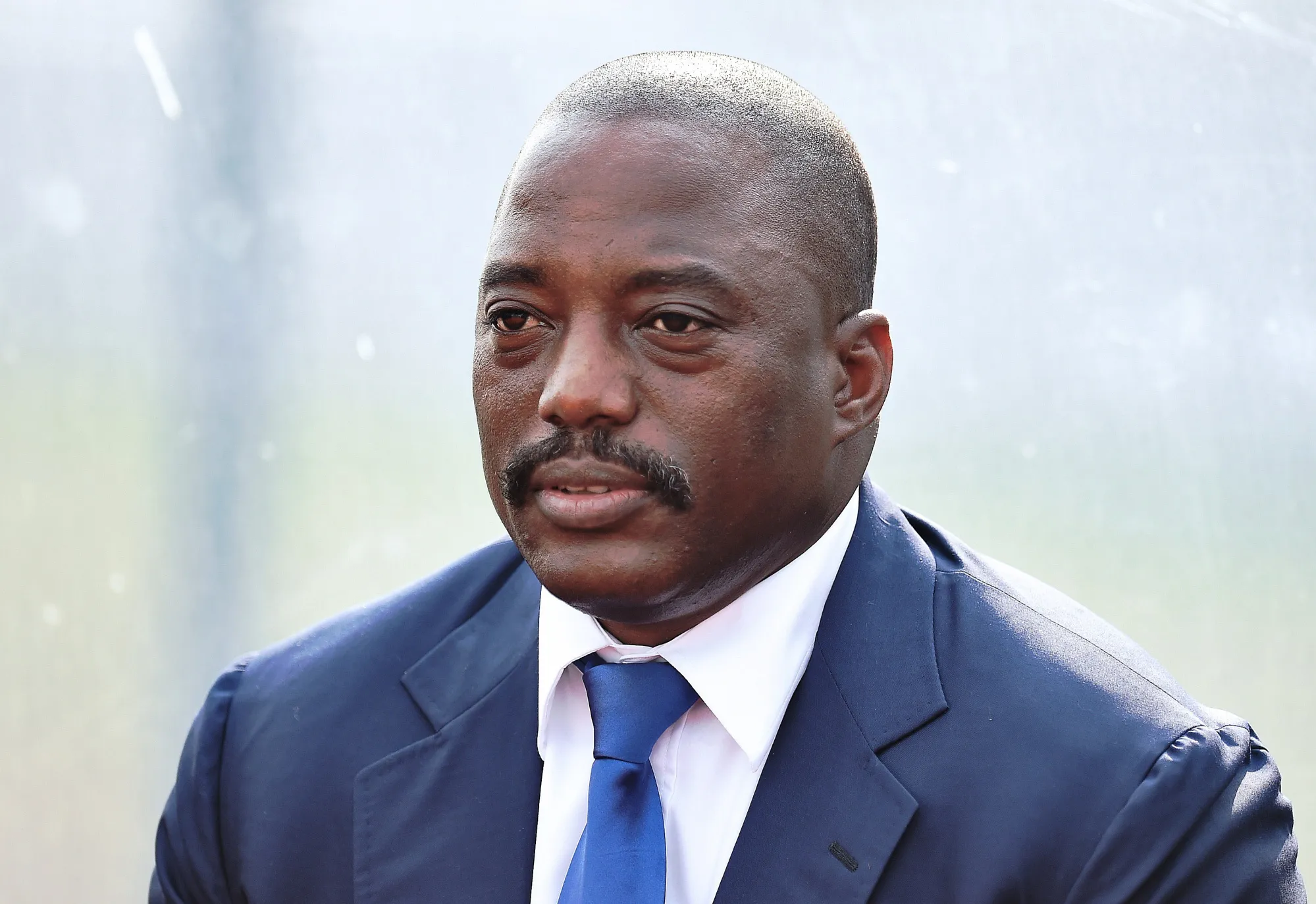
DRC Military Court Sentences Former President Joseph Kabila to Death in Absentia for High Treason
KINSHASA – In a stunning legal and political development that has sent shockwaves across Africa, a military court in the Democratic Republic of Congo has sentenced former President Joseph Kabila to death in absentia for high treason, murder, and undermining state security. The verdict, delivered by the High Military Court in Kinshasa, marks an unprecedented moment in Congolese politics, targeting a man who led the mineral-rich nation for 18 years and continues to wield significant influence.
The trial, which Kabila and his legal team dismissed as politically motivated and refused to participate in, centered on allegations that the former president orchestrated a violent insurrection in the country’s volatile east. Prosecutors argued that Kabila provided support to the M23 rebel group, which has been engaged in fierce fighting with Congolese armed forces, resulting in significant civilian casualties and territorial losses.
The Trial and Charges: A Political Earthquake
The military court proceedings, which lasted several weeks, presented evidence alleging that Kabila maintained communication with M23 leadership and facilitated weapons transfers to the group. The prosecution framed this as an act of high treason, accusing the former president of attempting to destabilize the current government of President Félix Tshisekedi, who succeeded Kabila in 2019 after historic elections.
“The court has found Joseph Kabila guilty of the crimes of high treason, murder, and undermining the internal and external security of the state,” declared the presiding military judge in a session that was closely followed throughout the nation. “The appropriate sentence for these crimes is death.”
In addition to the death sentence, the court ordered the confiscation of Kabila’s properties and assets within the DRC. Several of Kabila’s close associates, including former intelligence officials and military officers, received similar sentences, while others were handed lengthy prison terms for their alleged roles in the plot. The former president, whose whereabouts remain unknown but is believed to be outside the country, has consistently denied all allegations.
The dramatic verdict represents the culmination of years of escalating tension between Kabila’s political coalition and Tshisekedi’s administration. What began as a fragile power-sharing agreement has devolved into open political warfare, with both sides accusing the other of corruption and endangering national security. This breaking development is being closely monitored by international observers, with comprehensive analysis available through African News Desk, which provides ongoing coverage of continental political shifts.
Regional Implications and International Reaction
The sentencing of a former head of state has immediate ramifications for regional stability in Central Africa. The DRC, particularly its eastern provinces, has been embroiled in conflict for decades, with numerous armed groups vying for control of the region’s vast mineral wealth, including cobalt, coltan, and gold. The M23 rebellion, which the UN and Western powers allege receives support from neighboring Rwanda, has gained significant ground in recent months, displacing hundreds of thousands of civilians.
As reported by The Guardian, “The case against Kabila is seen by his supporters as politically motivated, intended to eliminate him as a political force. The verdict plunges the country into uncharted territory and risks further destabilizing the volatile east, where numerous armed groups continue to operate with impunity.”
International reaction to the verdict has been mixed. Western nations have expressed concern about the political implications of trying a former president in absentia, while regional bodies like the African Union have called for calm and dialogue. Human rights organizations have condemned the death penalty regardless of the verdict, noting that the DRC has maintained a de facto moratorium on executions for years.
The situation is particularly delicate given the DRC’s strategic importance in global supply chains for electric vehicle batteries and electronics. Any significant instability threatens to disrupt these markets and could have economic consequences far beyond Africa’s borders. Additionally, the verdict comes at a time when the United Nations peacekeeping mission in the DRC (MONUSCO) is beginning a phased withdrawal, transferring security responsibilities to Congolese forces.
As the nation grapples with this historic verdict, attention now turns to its potential implementation and the political fallout. The death sentence against Kabila is largely seen as symbolic given his absence from the country and the political complications of carrying it out. However, it effectively eliminates any possibility of his legal return to Congolese politics and represents the most dramatic escalation yet in the power struggle that has defined the post-Kabila era in one of Africa’s most strategically important nations.
