

Judicial Service Commission Opens Hunt for New Supreme Court Judge Ahead of 2027 Election
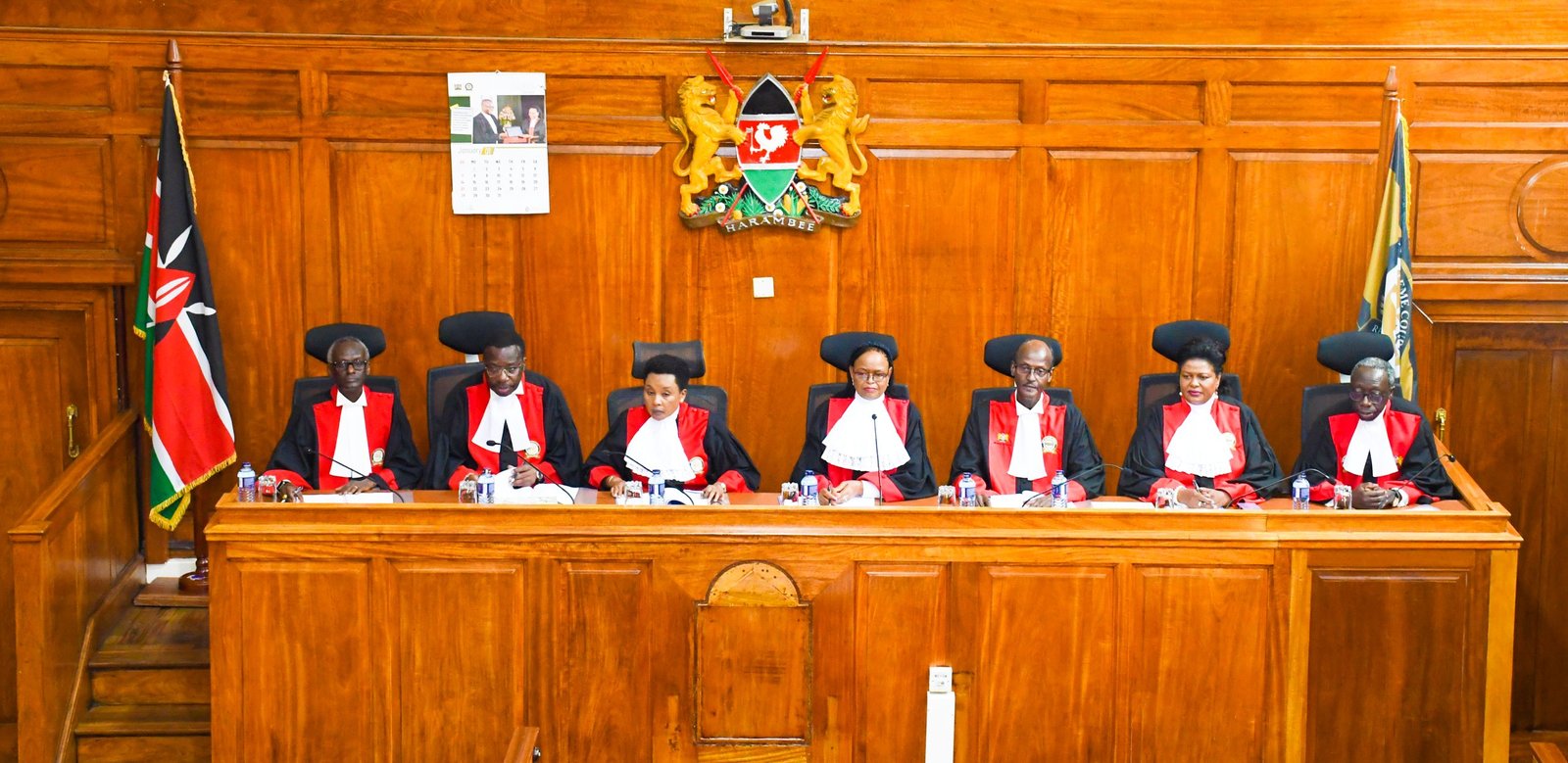
Kenya’s Judiciary has formally initiated the search for a new Supreme Court judge, filling a critical vacancy left by the passing of Justice Mohammed Ibrahim in December 2025. The Judicial Service Commission (JSC), led by Chief Justice Martha Koome, issued a gazette notice on January 13, 2026, inviting applications for the high-stakes position. The appointment process, detailed by sources including Capital FM and Kenyans.co.ke, is widely viewed as a strategic move to restore the court’s full seven-judge bench well ahead of the potentially contentious 2027 Presidential Election. With the apex court currently operating with six judges, securing a full complement is considered essential for maintaining the court’s decisiveness, particularly in cases that could end in a split vote.
Justice Ibrahim, who served on the Supreme Court since its re-establishment under the 2010 Constitution, was a pivotal figure in Kenya’s most consequential legal battles. At 69, he succumbed to a prolonged illness at Aga Khan Hospital in Nairobi. His passing not only created a vacancy but also removed from the bench a jurist with deep institutional memory, having been part of panels that adjudicated the disputed 2013 and 2022 presidential elections, as well as landmark rulings on constitutional amendments and civil rights. His successor will inherit a role of immense public trust and profound legal responsibility.
Qualifying for the Apex Court: The Stiff Criteria for Applicants
The JSC has set a high bar for candidates aspiring to join the nation’s highest court. As outlined in the gazette notice, applicants must be individuals of unquestionable integrity who meet the stringent requirements of Chapter Six of the Constitution on leadership and ethics. Professionally, they must hold a law degree from a recognized university and be an advocate of the High Court of Kenya or possess an equivalent qualification recognized in Kenya.
The core experience requirement is notably rigorous. Applicants must have at least fifteen years of experience as a distinguished academic, a judicial officer, a legal practitioner, or have served in another relevant legal field. This criterion is designed to ensure that the appointee brings a wealth of practical legal wisdom and scholarly depth to the bench. Beyond the technical qualifications, the JSC is seeking a jurist with exemplary personal attributes.
“In addition, the applicant should demonstrate a high degree of professional competence, communication expertise, fairness, good temperament, good judgement, wide breadth of both legal and life experience, and demonstrable commitment to public and community service,” stated the official notice from Chief Justice Koome.
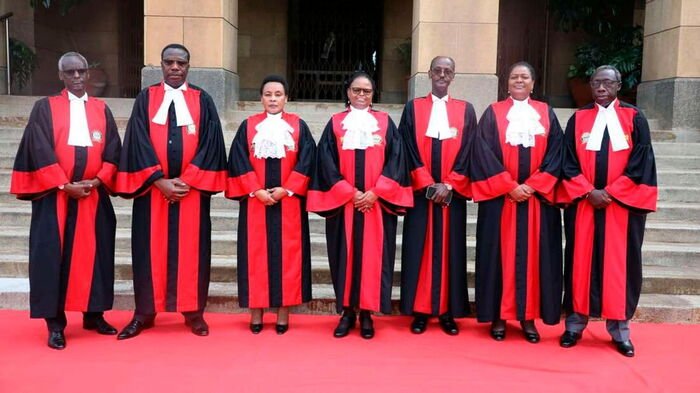
The role itself is constitutionally weighty. The new Supreme Court judge will participate in the court’s exclusive original jurisdiction to hear and determine disputes arising from presidential elections—a function that places them at the epicenter of the nation’s democratic process. They will also hear appeals from the Court of Appeal and other tribunals, provide advisory opinions to national and county governments, and consider applications related to declarations of a state of emergency. Interested candidates have been directed to submit their applications through the JSC’s official jobs portal.
Why a Full Bench Matters: The 2027 Election and Historical Precedent
The urgency to fill this vacancy is intrinsically linked to the electoral calendar. While the current six-judge bench remains quorate for most appeals, which are typically heard by three or five judges, a presidential election petition presents a unique challenge. Such a case requires a full bench, and an even number of judges raises the risk of a 3-3 tie, which could lead to procedural delays or an inability to reach a definitive ruling in the most politically sensitive case imaginable. Restoring the bench to its full complement of seven judges is therefore a critical step in safeguarding the judiciary’s capacity to deliver a clear and timely verdict in 2027.
The Supreme Court’s recent history underscores the gravity of this appointment. Since its inception, the court has repeatedly been the final arbiter of Kenya’s most divisive political and constitutional questions. In 2017, it made history by nullifying a presidential election, a landmark decision delivered by a full bench. In 2022, it unanimously dismissed another presidential election petition. Beyond elections, the court has issued transformative rulings, such as striking down the Building Bridges Initiative (BBI) constitutional amendment process in 2022 and affirming the inheritance rights of children born out of wedlock in a 2025 decision that balanced constitutional equality with religious law. Justice Ibrahim was part of the bench in this latter, socially significant ruling.
“The vacancy…leaves the country’s highest court with six judges…the current bench of six, though above the constitutional minimum of five judges, could face challenges in adjudicating presidential election petitions, where an even number of judges increases the risk of a tie and could delay critical rulings,” analysis from Kenyans.co.ke noted, highlighting the core institutional concern.
The successful applicant will join a court that is not just a legal institution but a central pillar of Kenyan democracy. They will serve until the mandatory retirement age of 70, with an option for early retirement at 65, meaning their influence will extend far beyond the next election cycle. For continuous coverage of this pivotal appointment process and other major developments in the country, follow Africanewsdesk.net’s Kenya News.
As the JSC begins its meticulous vetting process, the nation watches closely. The selection of the next Supreme Court judge is more than a personnel decision; it is a defining moment for the Judiciary’s independence, its perceived impartiality, and its preparedness to uphold the Constitution during future moments of national crisis. The individual who ultimately ascends to this role will carry the heavy mantle of helping to steer Kenya’s legal and democratic trajectory for years to come.
