

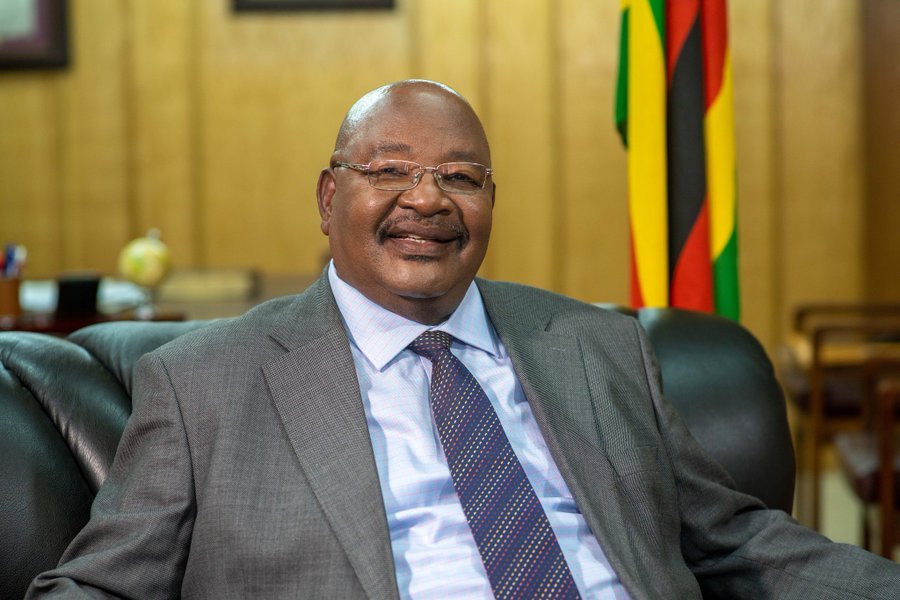
Mnangagwa Wields Axe in Major ZANU-PF Reshuffle, Demotes Chiwenga Ally Obert Mpofu
HARARE – President Emmerson Mnangagwa has executed a significant reshuffle within ZANU-PF’s powerful Politburo, demoting long-serving party stalwart and former Secretary for Administration, Obert Mpofu, in a move widely interpreted as a strategic strike against Vice President Constantino Chiwenga’s influence. The restructuring, announced on Tuesday, sees Mpofu removed from one of the most influential positions in the party and reassigned to the less prominent role of Secretary for Transport and Social Welfare, signaling a major recalibration of power ahead of critical future elections.
The surprise decision ends Mpofu’s tenure as the party’s administrative chief, a role that placed him at the very heart of ZANU-PF’s daily operations and electoral strategy. He is replaced by Dr. Obert Mpofu’s former deputy, Patrick Chinamasa, a seasoned legal mind and loyal Mnangagwa ally. The reshuffle, detailed in a report by NewZimbabwe.com, is the most substantial change to the party’s top structures since Mnangagwa consolidated power following the 2017 military-assisted transition that ousted Robert Mugabe. The move has sent shockwaves through the party, underscoring the ongoing and often volatile internal dynamics.
Political analysts were quick to link Obert Mpofu‘s demotion to his perceived allegiance to Vice President Chiwenga. Mpofu, a wealthy businessman and former Minister of Home Affairs, has long been seen as a key figure within a faction aligned with Chiwenga, the former military chief who played a pivotal role in Mnangagwa’s rise. As reported by ZimLive, the reshuffle is viewed as a deliberate effort by Mnangagwa to sideline potential rivals and tighten his grip on the party apparatus, particularly as succession debates simmer beneath the surface. The timing is critical, with the party preparing for future electoral challenges and seeking to present a unified front amid a debilitating economic crisis.
The Fall of a Political Heavyweight: Obert Mpofu’s Diminished Role
The demotion of Obert Mpofu represents a significant fall from grace for one of Zimbabwe’s most enduring political figures. As Secretary for Administration, he was responsible for the party’s discipline, membership, and overall organization, making him a central gatekeeper and a formidable force within ZANU-PF. His new portfolio, Transport and Social Welfare, is considered a backwater in comparison, with far less influence over the party’s core strategic and operational decisions.
Mpofu’s political career spans decades, having served in various ministerial roles under both Mugabe and Mnangagwa. His reputation as a shrewd and resilient operator made him a mainstay in the upper echelons of power. However, his close association with Vice President Chiwenga appears to have become a liability in the eyes of Mnangagwa, who has grown increasingly wary of the influence wielded by his deputy. The reshuffle is a clear message that loyalty to the presidency must be absolute and unambiguous.
“The position of Secretary for Administration is the engine of the party. By moving Mpofu, Mnangagwa is not just changing personnel; he is installing his own man at the very heart of the party machine. This is about controlling the levers of power ahead of any potential internal challenges,” said a Harare-based political commentator who requested anonymity.
The reaction on social media was immediate, with many viewing the move through the lens of the Mnangagwa-Chiwenga rivalry. A post on X (formerly Twitter) by user @daddyhope, which garnered significant attention, succinctly captured the prevailing sentiment, stating: “Mnangagwa clips Chiwenga’s wings. Obert Mpofu out as ZANU PF Secretary for Administration. The battle lines are being redrawn.” This public interpretation, while unofficial, highlights how the reshuffle is perceived as a direct maneuver in the complex game of thrones within the ruling party.
Broader Implications: Succession Politics and Party Stability
Beyond the immediate fate of Obert Mpofu, the reshuffle has profound implications for ZANU-PF’s internal stability and the delicate issue of succession. Mnangagwa, who is widely expected to seek re-election, has consistently moved to neutralize any potential threats to his authority. The sidelining of a prominent Chiwenga ally like Mpofu is a preventative strike, aimed at weakening any coordinated push for a leadership change in the medium to long term.
The promotion of Patrick Chinamasa is equally significant. A veteran politician and former Finance Minister, Chinamasa is regarded as a staunch Mnangagwa loyalist with deep institutional knowledge. His appointment to the key administrative role ensures that the party’s machinery is in the hands of someone the President trusts implicitly. This consolidation of power around Mnangagwa’s inner circle may streamline decision-making but also risks alienating other party factions and increasing internal resentment.
“This is a classic case of pre-emptive consolidation. President Mnangagwa is aware that the greatest threat to his power often comes from within. By moving a figure like Mpofu, he is sending a clear signal to the entire party about where the center of power lies and what happens to those who are perceived to be building rival centers of influence,” noted a senior party insider who spoke on condition of anonymity.
For the nation, these internal ZANU-PF power plays have real-world consequences. The government’s ability to address the country’s severe economic challenges—including hyperinflation, currency instability, and widespread poverty—can be hampered when the ruling party is preoccupied with internal succession battles. The reshuffle suggests that Mnangagwa’s primary focus remains on securing his political flank, potentially at the expense of the decisive and unified action needed to tackle the economic crisis.
As the dust settles on this major shake-up, the political trajectory of Obert Mpofu will be closely watched. Will he accept his diminished role quietly, or will this demotion push him and his allies toward a more confrontational stance? The answers to these questions will shape the next chapter of ZANU-PF’s internal politics and determine whether Mnangagwa’s gamble to sideline a key player will bring stability or ignite further conflict within the aging liberation movement.
