

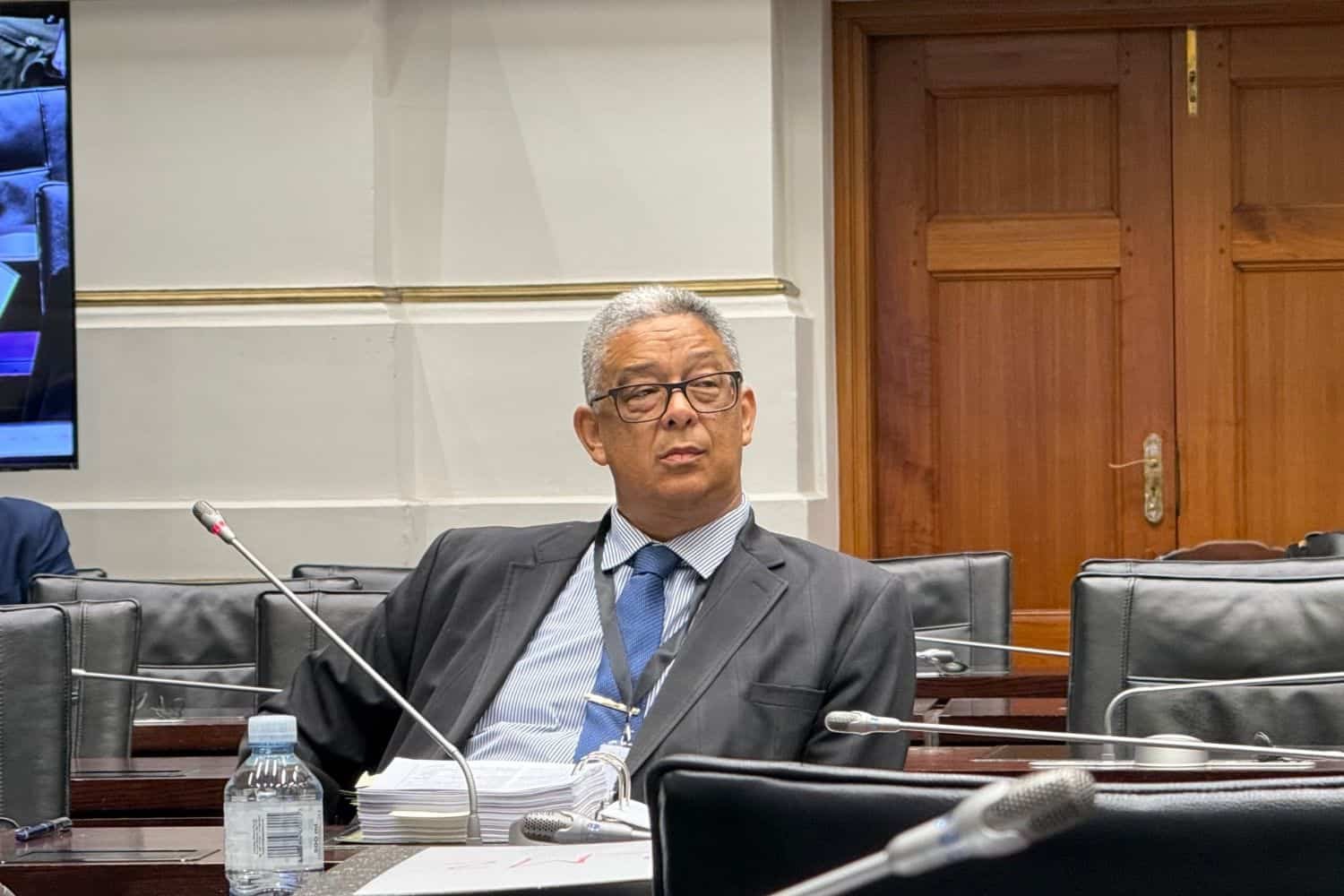
Robert McBride Faces Fire in Parliament Over Secrecy and Claims of Crime Intelligence Infiltration
South Africa’s parliamentary Ad Hoc Committee investigating police corruption was thrust into turmoil on Tuesday as former Independent Police Investigative Directorate (Ipid) head Robert McBride delivered explosive testimony. McBride, a figure long associated with high-stakes police oversight, found himself under intense scrutiny from Members of Parliament (MPs) for his refusal to publicly disclose his current employment status with the State Security Agency (SSA). Simultaneously, he levied grave allegations that Crime Intelligence units had systematically infiltrated Ipid in a bid to manipulate investigations and “fabricate” evidence against senior officials. The dramatic session, as reported by IOL and Business Day, revealed deep tensions between legislative oversight and state secrecy, while resurrecting shadows of past political battles within the security services.
McBride’s appearance before the committee, which is probing allegations made by KwaZulu-Natal police commissioner Nhlanhla Mkhwanazi, began contentiously. He immediately clashed with MPs when he declined to confirm his present role, stating only that he works within the intelligence services. “I am not allowed to say what my employment is,” McBride asserted, citing the Intelligence Services Act (39 of 1994) and claiming he needed permission from his “principals” to divulge the information. This stance was met with frustration and skepticism from across the political spectrum. MK Party MP David Skosana insisted, “It can’t be a secret,” while ANC MP Xola Nqola challenged McBride’s legal interpretation, suggesting the information was publicly accessible. The controversy was compounded by the revelation that the CV McBride submitted to guide his testimony was outdated, leading ActionSA MP Dereleen James to question the validity of his entire presentation.
Allegations of Infiltration and the “Illegal Rendition” Case
Amidst the furore over his own status, McBride pivoted to making serious allegations about institutional corruption. He testified about a “calculated campaign” by Crime Intelligence to infiltrate Ipid, the very body mandated to investigate police misconduct. According to McBride, this infiltration was designed to “fabricate” evidence and discredit high-ranking officials, particularly in sensitive cases. The most prominent example he cited was the controversial 2010 “illegal rendition” case, involving the arrest and handover of Zimbabwean nationals to Zimbabwean authorities—an operation that resulted in several deaths.
McBride detailed why Ipid, under his leadership, refused to recommend the prosecution of former Hawks bosses Shadrack Sibiya and Anwa Dramat for their alleged roles. His testimony implied that the case against them was tainted by the alleged Crime Intelligence operation within Ipid, aimed at manipulating the outcome for political purposes. These claims suggest a disturbing scenario where the watchdog agency designed to ensure police accountability was itself compromised by the entities it was supposed to oversee, raising profound questions about the integrity of past investigations and the safety of whistleblowers within the justice system.
“We made similar observations. We must maintain the decorum. We are not being funny. We are here to work as MPs,” stated MK Party MP Sibonelo Nomvalo, criticizing McBride’s conduct. Nomvalo also accused him of submitting an incorrect CV, arguing, “The excuse the witness is giving here is invalid.”
A Test of Parliamentary Authority and Institutional Integrity
The hearing became a stark test of parliamentary authority versus the culture of secrecy that often surrounds intelligence work. MPs were visibly angered by what they perceived as McBride’s defiance and lack of preparation. Beyond the employment issue, McBride was criticized for his demeanor during the proceedings. ANC MP Xola Nqola explicitly called him out, stating, “He is doing funny gestures of laughing when somebody is talking. If he wants us to have a good day, he must refrain from that.” This focus on decorum underscored the heightened tensions and the committee’s insistence on being treated with formal respect.
The core conflict lies in the balance between national security confidentiality and the transparency required for effective parliamentary oversight. McBride’s position highlights a dilemma: intelligence officials are bound by strict secrecy laws, yet lawmakers argue they cannot properly assess a witness’s testimony, potential biases, or conflicts of interest without knowing for whom he works. The committee’s investigation into police corruption now grapples with a meta-question: can it trust the processes of institutions that may have been infiltrated, and can it get straight answers from witnesses cloaked in state secrecy? For continued coverage of this and other critical South African stories, follow developments on Africanewsdesk.net’s South Africa News.
“That means we have a falsified statement. We can’t continue as if it is acceptable,” asserted ActionSA MP Dereleen James regarding McBride’s outdated CV, capturing the committee’s frustration with what they viewed as a lack of seriousness and preparation from the witness.
The testimony of Robert McBride has left the ad hoc committee with a complex dual challenge. First, it must navigate the legal and procedural thicket surrounding a witness who invokes state secrecy, determining how to compel necessary information without compromising legitimate security concerns. Second, and more consequentially, it must seriously investigate his allegations of Crime Intelligence’s infiltration of Ipid. If true, these claims suggest a systemic attack on South Africa’s mechanisms of police accountability, with implications that could unravel past cases and demand major structural reforms. The coming days will reveal whether Parliament can cut through the secrecy and uncover the truth, or if this inquiry will become another chapter in the long, contentious history of South Africa’s struggle to hold its security services to account.
