

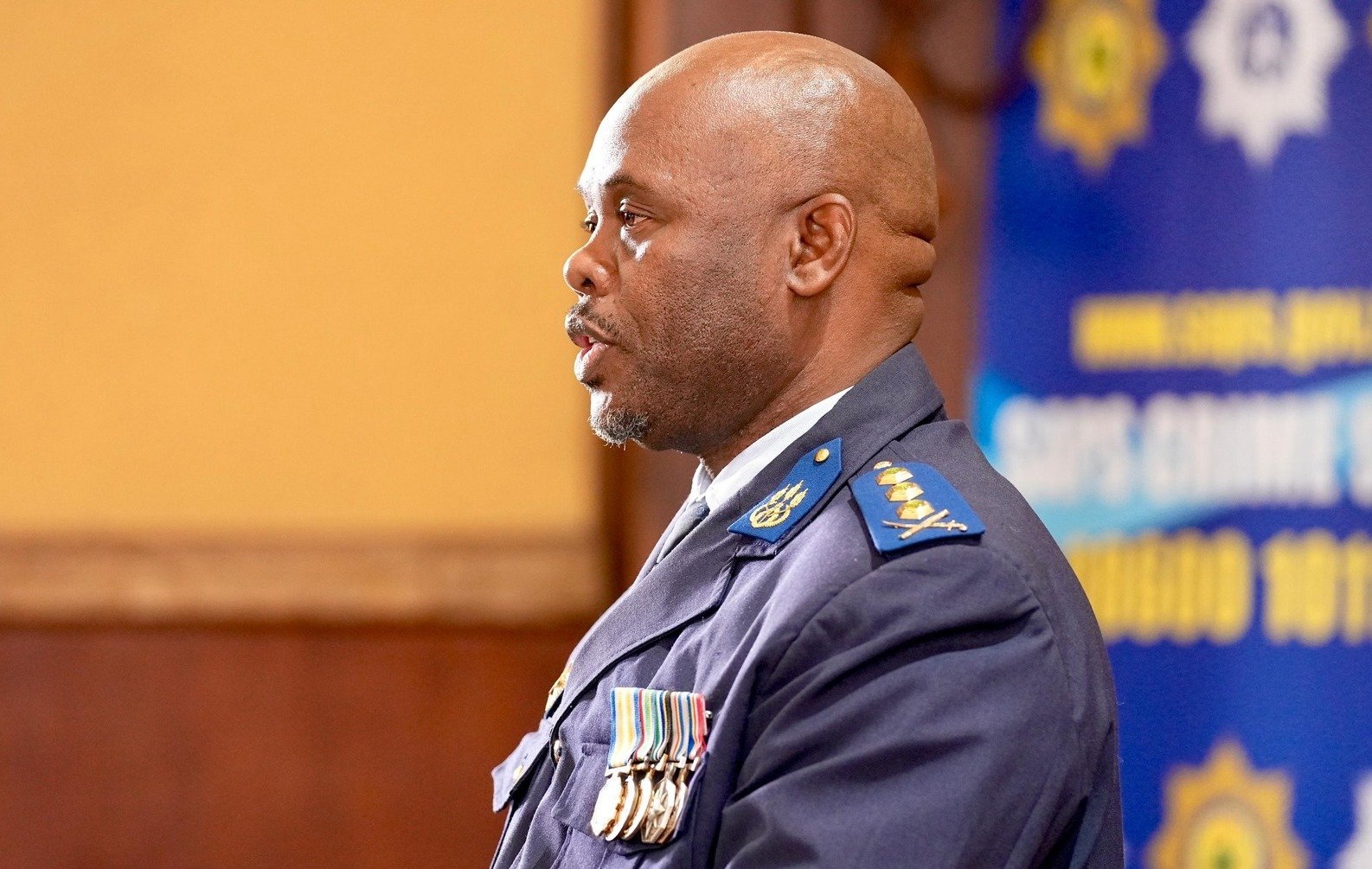
Police Deny Arrest of Suspended Deputy Commissioner Shadrack Sibiya Amid Heavily-Armed Home Raid
In a dramatic development that highlights the deep divisions within South Africa’s law enforcement leadership, a large contingent of heavily armed police officers descended on the Centurion home of suspended Deputy National Police Commissioner Lieutenant-General Shadrack Sibiya on Thursday. The operation, which involved members of the Special Task Force and Crime Intelligence units, created confusion about whether Sibiya was facing imminent arrest or the confiscation of his electronic devices, though police authorities later denied any arrest had taken place.
The tense standoff at Sibiya’s high-walled residence came as the senior official finds himself at the center of multiple investigations into alleged criminal and political interference within the South African Police Service (SAPS). At least 50 officers, some armed with rifles and representing South Africa’s most specialized units, surrounded the property in what sources described as an operation potentially linked to a warrant of arrest for defeating the ends of justice or the seizure of personal electronic devices.
Conflicting Accounts Emerge Amid Police Operation
As news of the police presence at Sibiya’s home spread, National police spokesperson Brigadier Athlenda Mathe moved quickly to dispel rumors of an arrest. “There are investigations that are ongoing as publicised and mentioned at the ad hoc committee and the Madlanga Commission,” Mathe stated. “As SAPS, we are not aware of any person who has been arrested thus far, and that includes Lieutenant General Shadrack Sibiya.”
According to an IOL report, Sibiya had been consulting with his attorney ahead of his scheduled appearance before Parliament’s Ad Hoc Committee next week when he received the call to return home to find it surrounded by police. The suspended deputy commissioner arrived at his residence with his legal representative in the afternoon, with officers already inside the property conducting their operation.
“As SAPS, we are not aware of any person who has been arrested thus far, and that includes Lieutenant General Shadrack Sibiya,” National police spokesperson Brigadier Athlenda Mathe stated emphatically, attempting to clarify the situation amid conflicting reports.
The scene outside Sibiya’s home drew significant attention throughout the day, with the heavy police presence suggesting a major operation was underway. An EWN report detailed how the situation remained fluid, with sources close to the top cop suggesting the operation could be related to a warrant of arrest for defeating the ends of justice or the confiscation of personal electronic devices from him. The uncertainty surrounding the police action reflects the broader tensions within SAPS leadership that have become a focal point in recent South Africa news coverage.
Background: Allegations and Suspension
Sibiya’s current troubles stem from serious allegations made by KwaZulu-Natal Police Commissioner Lieutenant-General Nhlanhla Mkhwanazi, who recently testified that Sibiya, suspended Police Minister Senzo Mchunu, and others are part of a syndicate purportedly obstructing police operations in South Africa. These allegations have placed Sibiya at the center of the ongoing political and criminal investigations rocking the police service.
The suspended deputy commissioner’s name has featured prominently during testimony at both the Madlanga Commission of Inquiry and Parliament’s ad hoc committee, with both bodies probing allegations of criminal and political interference within SAPS. Specifically, Sibiya stands accused of having ignored protocol and issued an instruction to have 121 dockets being investigated by the KwaZulu-Natal political killings task team transferred to his office.
Sources close to the investigation revealed that “the operation may lead to his arrest or the confiscation of cellphones,” highlighting the uncertain nature of Thursday’s police action at Sibiya’s Centurion residence.
Last month, these allegations led to Sibiya’s suspension by National Police Commissioner Fannie Masemola regarding the dockets saga. Commissioner Mkhwanazi has further accused Sibiya of having links to criminal cartels operating in Gauteng, though no evidence has been publicly provided to corroborate these specific claims. The suspension and subsequent investigations represent a significant fall from grace for one of South Africa’s top law enforcement officials.
The ongoing power struggle within SAPS comes at a critical time for South Africa’s criminal justice system, which faces mounting challenges from organized crime, political violence, and internal corruption. The very public targeting of a senior police official like Sibiya by his colleagues underscores the deep institutional divisions that have hampered effective policing in the country. As these internal conflicts play out through official commissions and parliamentary committees, public confidence in the police service continues to be tested.
Thursday’s events at Sibiya’s home represent another chapter in the ongoing turmoil within South Africa’s law enforcement leadership. The significant police presence, involving elite units typically reserved for high-risk operations, suggests the seriousness with which authorities are treating the allegations against the suspended deputy commissioner. However, the official denial of any arrest highlights the sensitive nature of investigating senior police officials and the careful balancing act required in such operations.
As the situation continues to develop, all eyes will be on Sibiya’s scheduled appearance before Parliament’s Ad Hoc Committee next week, where he is expected to respond to the allegations against him. The outcome of these proceedings could have far-reaching implications for the future leadership of SAPS and the broader fight against corruption within South Africa’s state institutions. The ongoing investigations at both the Madlanga Commission and parliamentary committee promise to reveal more about the extent of political interference and criminality within the country’s law enforcement structures.
