

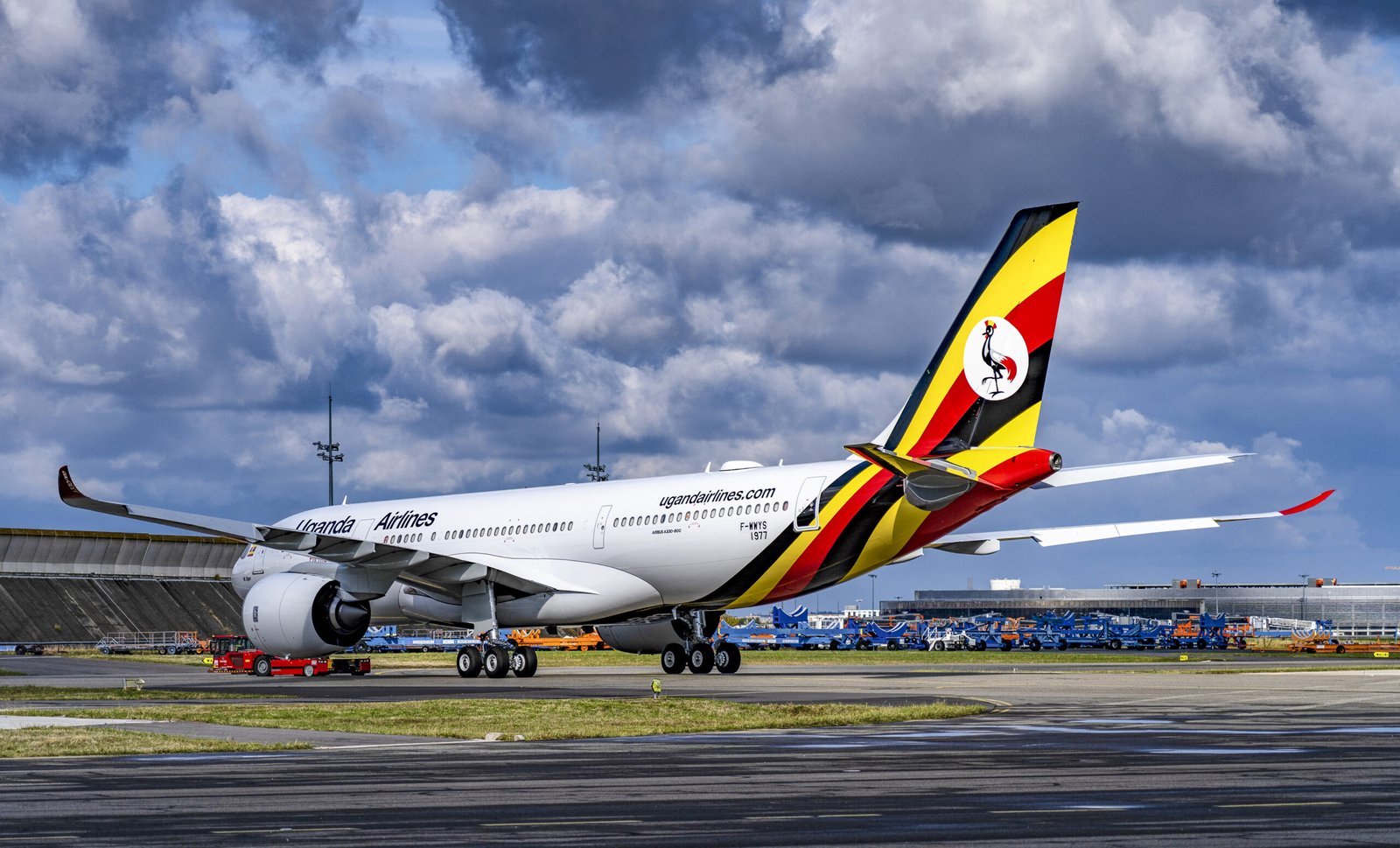
Aviation Giant Takes the Helm: Ethiopia’s Girma Wake Appointed to Revive Uganda Airlines
KAMPALA, Uganda – In a strategic move signaling a major shift for its national carrier, the Ugandan government has appointed Girma Wake, the celebrated former Chief Executive Officer of Ethiopian Airlines, as the new CEO of Uganda Airlines. The appointment, confirmed by State Minister Balaam Barugahara, follows a meeting between Wake, Ugandan pilot Robert Kateera, and President Yoweri Museveni at State House on Wednesday. The decision, reported by Pulse Uganda, places one of Africa’s most respected aviation minds at the helm of the struggling national airline, raising hopes for a profound operational and strategic transformation modeled on the continent’s most successful carrier.
President Museveni noted on social media platform X that the meeting covered “matters regarding air transport among other issues.” The appointment ends the tenure of Jenifer Bamuturaki and represents a direct intervention by the highest levels of government to salvage the airline’s fortunes. Minister Barugahara, who met with Wake personally, hailed the appointment, describing the Ethiopian national as “one of the finest aviation minds on the African continent.” He credited Wake with playing a “key role in turning [Ethiopian Airlines] into a global powerhouse” during his tenure as CEO from 2004 to 2011. For ongoing coverage of this development and other major stories shaping the nation, follow our dedicated Uganda news desk.
From Continental Blueprint to National Revival
The appointment of Girma Wake is more than a routine management change; it is a clear statement of intent to replicate a proven African success story. Under Wake’s leadership, Ethiopian Airlines solidified its position as the continent’s largest and most profitable airline, renowned for its operational efficiency, expansive network, and strategic hub model in Addis Ababa. The hope in Kampala is that Wake can apply the same principles to Uganda Airlines, which has faced significant headwinds since its revival in 2019, including financial losses, operational challenges, and allegations of mismanagement.
“Finally President @KagutaMuseveni met Girma Wake, former Ethiopian Airlines CEO… Wake will help us manage the transition from the current corrupt and incompetent management to a new one,” posted veteran journalist and businessman Andrew Mwenda, reflecting a broader sentiment that the airline requires a fundamental overhaul.
Mwenda’s pointed comments highlight the depth of the perceived crisis and the expectation that Wake’s arrival marks a definitive break from the past. “We shall also need an entirely new administrative approach to managing Uganda Airlines,” Mwenda added, emphasizing that the focus must now shift “from disputes to practical solutions.” This sentiment underscores a national impatience for results and a belief that importing top-tier expertise is the fastest path to stability and growth. The appointment also carries a political dimension, with Minister Barugahara publicly thanking General Muhoozi Kainerugaba, the president’s son and a influential military figure, for recommending Wake, intertwining the airline’s future with the nation’s political dynamics.
Navigating Turbulence: The Challenges Ahead for Uganda’s Flag Carrier
Wake’s in-tray will be formidable. Uganda Airlines operates in a highly competitive regional market against established giants like Ethiopian, Kenya Airways, and RwandAir. It has struggled to achieve profitability, with its fleet of Airbus A330neos and CRJ900s representing a significant financial commitment. Key challenges include optimizing route networks to ensure viability, improving on-time performance and service quality to attract premium passengers, and building efficient connecting traffic through its Entebbe hub. Furthermore, the airline must navigate complex geopolitical and economic pressures, including volatile fuel prices and foreign exchange fluctuations.
“The time for quarrels and recriminations should end. Now is time for concrete solutions,” Andrew Mwenda stated, calling for a unified focus on execution under the new leadership.
Wake’s strategy will likely focus on core principles that drove Ethiopian’s success: rigorous cost control, a focus on cargo and passenger revenue, strategic partnerships, and meticulous attention to maintenance and safety. A potential early priority will be to conduct a thorough operational and financial audit to identify the most acute pain points. Another will be to assess the current fleet and network strategy, potentially seeking more efficient aircraft utilization and exploring new routes that leverage Uganda’s geographical position. Crucially, he will need to instill a culture of commercial discipline and excellence in a organization that critics argue has suffered from political interference and administrative lethargy.
The success or failure of this high-profile appointment will have implications far beyond the airline itself. A thriving Uganda Airlines is viewed as a critical piece of national infrastructure, vital for boosting tourism, facilitating trade, and enhancing Uganda’s connectivity and prestige on the global stage. The government’s willingness to recruit external, world-class talent demonstrates a recognition that the previous approach was not working. However, Wake’s effectiveness will depend not just on his own expertise but on the degree of autonomy and support he receives from the government and other stakeholders. If he is given the space to implement necessary, and potentially painful, reforms free from political pressure, Uganda Airlines may yet have a chance to emulate the soaring success of its Ethiopian inspiration. If not, his tenure risks becoming another chapter in the troubled history of state-owned aviation in Africa. The eyes of the continent are now on Entebbe, waiting to see if the magic of Ethiopian Airlines can be successfully transplanted to Ugandan soil.
