

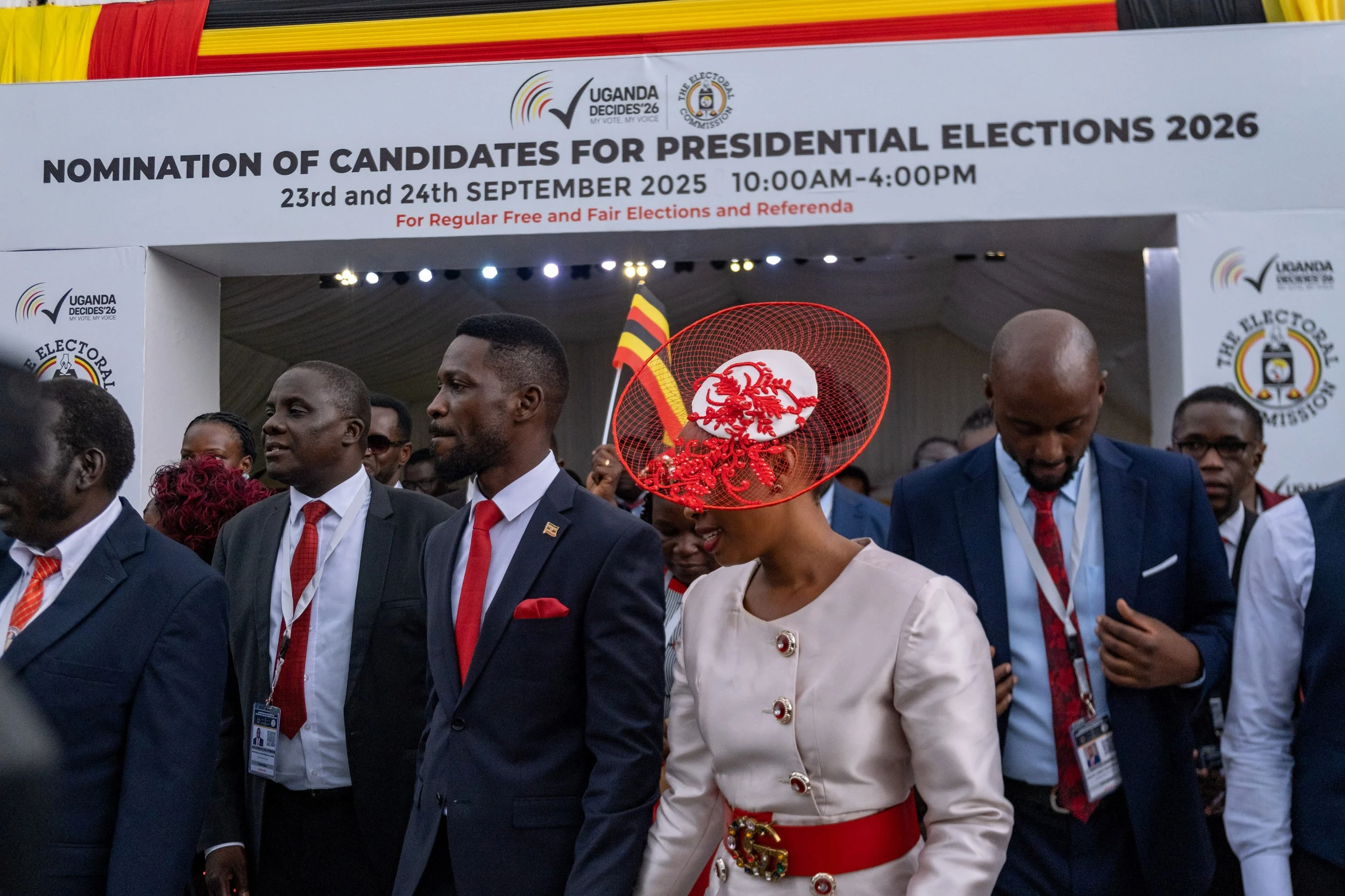
Uganda Prepares for High-Stakes Election Amid Fears of Violence and Democratic Decline
Uganda is poised for a pivotal general election on January 15, 2026, with long-serving President Yoweri Museveni widely expected to extend his nearly four-decade rule in a climate of intense repression and violence. The campaign has been marked by a severe crackdown on the main opposition candidate, the singer-turned-politician Bobi Wine (Robert Kyagulanyi), whose supporters have faced tear-gassing, arrests, and lethal force. As the country of over 21.6 million registered voters heads to the polls, observers warn that the process risks further entrenching autocracy and exacerbating regional instability in an already volatile part of Africa. This election is not merely a contest for power but a stark referendum on the democratic promises Museveni made upon taking office in 1986—promises that critics say have been systematically betrayed.
The pre-election environment, as detailed in reports from The Guardian and an analysis from The Conversation, has been characterized by widespread intimidation. Authorities have suspended the work of critical rights groups, detained activists, and implemented a nationwide internet shutdown and mobile service limitations. These actions have drawn condemnation from the United Nations and fueled fears of post-election violence similar to the deadly unrest seen in neighboring Tanzania. The election presents the ruling National Resistance Movement (NRM) with its most significant challenge yet, testing the limits of its “liberator” narrative against a youthful population demanding change and accountability.
The Anatomy of an Autocracy: Museveni’s Grip on Power
President Yoweri Museveni, now 81 and seeking a seventh term, initially came to power as a reformer after a brutal civil war. He promised a “fundamental change” and criticized African leaders who clung to power while their people suffered. Today, nearly forty years later, his rule exemplifies the very tendencies he once condemned. Analysts identify five pillars underpinning the current system: entrenched authoritarianism, systemic corruption, widespread poverty, rampant human rights abuses, and sophisticated digital repression.
Museveni has consolidated power by placing family and loyalists in control of all state institutions. His son, General Muhoozi Kainerugaba, commands the military, while his wife serves as education minister. This personalization of the state extends to the judiciary, legislature, and electoral commission, ensuring there are no independent checks on executive power. Meanwhile, corruption siphons an estimated $2.8 billion annually from the national coffers, even as nearly 60% of the population lives on less than $3 a day, and public services like schools and hospitals remain dilapidated.
“Once the liberator, Museveni has become the strongman, overseeing a deeply repressive system. Political opposition, civil society and ordinary citizens have faced growing human rights violations, violence and intimidation. This is particularly targeted at young people and political dissidents,” notes an academic analysis of the regime’s evolution.
The campaign against Bobi Wine’s National Unity Platform (NUP) has laid bare the regime’s repressive tactics. Security forces have routinely broken up opposition rallies with tear gas, live ammunition, and brute force, resulting in deaths, hundreds of arrests, and widespread allegations of torture. The government justifies these actions as a response to “lawless conduct,” but human rights lawyers and international bodies see a clear strategy to stifle dissent. As human rights lawyer Eron Kiiza, a victim of alleged state torture, stated regarding the disruptions of opposition events: “Everything is done to frustrate and annoy.”
Bobi Wine and the Youth-Led Struggle for a “Complete Reset”
At the heart of this political struggle is 43-year-old Bobi Wine, whose message of democratic renewal and anti-corruption has galvanized Uganda’s vast youth demographic—a population that has never known another president. His manifesto promises a “complete reset of Uganda,” focusing on job creation, restoring respect for human rights and the rule of law, and ending the systemic corruption that plagues the country. For his supporters, he represents a tangible hope for change and a break from a political dynasty they view as outdated and self-serving.
However, Wine’s campaign operates under constant threat. He has survived multiple alleged assassination attempts, is frequently pepper-sprayed and denied venues, and his supporters are targeted. He has warned that the regime has plans to assassinate him, a concern that underscores the perilous nature of Ugandan politics. Despite this, he remains defiant. As Florence Naluyiba, an NUP supporter, explained: “Our dream is to have a president who will prioritise social service delivery. Bobi Wine has taken the risk to stand up for Ugandans at the expense of his freedom.”
Political historian Mwambutsya Ndebesa observes that the opposition’s challenge has forced the regime to reveal its true character: “[Wine’s] challenge has brought to the surface the character of the regime in terms of tolerating political alternatives or dissent… The political class is getting more and more politically polarised. And that threatens the stability of the country because Uganda is prone to political instability.”
The electoral playing field is profoundly uneven. Museveni benefits from complete control of state resources, the security apparatus, and the machinery of government, using the slogan “protecting the gains” to campaign on a platform of stability and future oil wealth. As historian Ndebesa concedes, “The winning [of Museveni] in Uganda is almost a given.” Yet, the election is closely watched for signals about the eventual succession, with many believing Museveni is grooming his son, General Muhoozi, to take over, potentially cementing a de facto monarchy.
Regional Repercussions and the Call for Action
 The outcome of Uganda’s election has implications far beyond its borders. The country sits in the tumultuous Great Lakes region, surrounded by six neighbors—Burundi, South Sudan, DRC, Rwanda, Tanzania, and Kenya—all grappling with various forms of instability. Uganda itself has been a key regional actor, with its 1996 invasion of the DRC alongside Rwanda triggering waves of violence that persist today. Analysts warn that a further descent into authoritarianism and internal conflict in Uganda could spill over, destabilizing an already fragile region.
There is a palpable fear of mass violence. Museveni has ominously stated that every soldier will have “120 bullets to silence protesters,” and his son, the military chief, has publicly threatened Bobi Wine. This has led to urgent calls for international intervention to prevent potential atrocities. Experts argue that the African Union’s Peace and Security Council must hold Museveni to his obligations to respect rights and freedoms, and that a standby international force may be necessary to protect civilians. The wider international community is urged to halt weapons sales and enforce international law.
The struggle in Uganda is part of a broader continental movement, seen in Kenya and Burkina Faso, where young Africans are increasingly demanding accountable leadership. Supporting a democratic transition in Uganda is framed not just as a moral imperative but as a critical step for long-term regional peace, security, and development. For continuous, on-the-ground coverage of this critical election and its aftermath, follow the latest reports on Africanewsdesk.net’s Uganda News.
As Ugandans vote, the world watches a nation at a crossroads. Will it reinforce a 40-year personalist rule marked by repression, or will the defiant energy of its youth movement eventually catalyze the democratic “fundamental change” once promised? The immediate result may seem preordained, but the underlying tensions and demands for accountability signal that the political battle for Uganda’s soul is far from over. The choices made by its leaders and the response of the international community in the coming days will have profound consequences for millions.
