

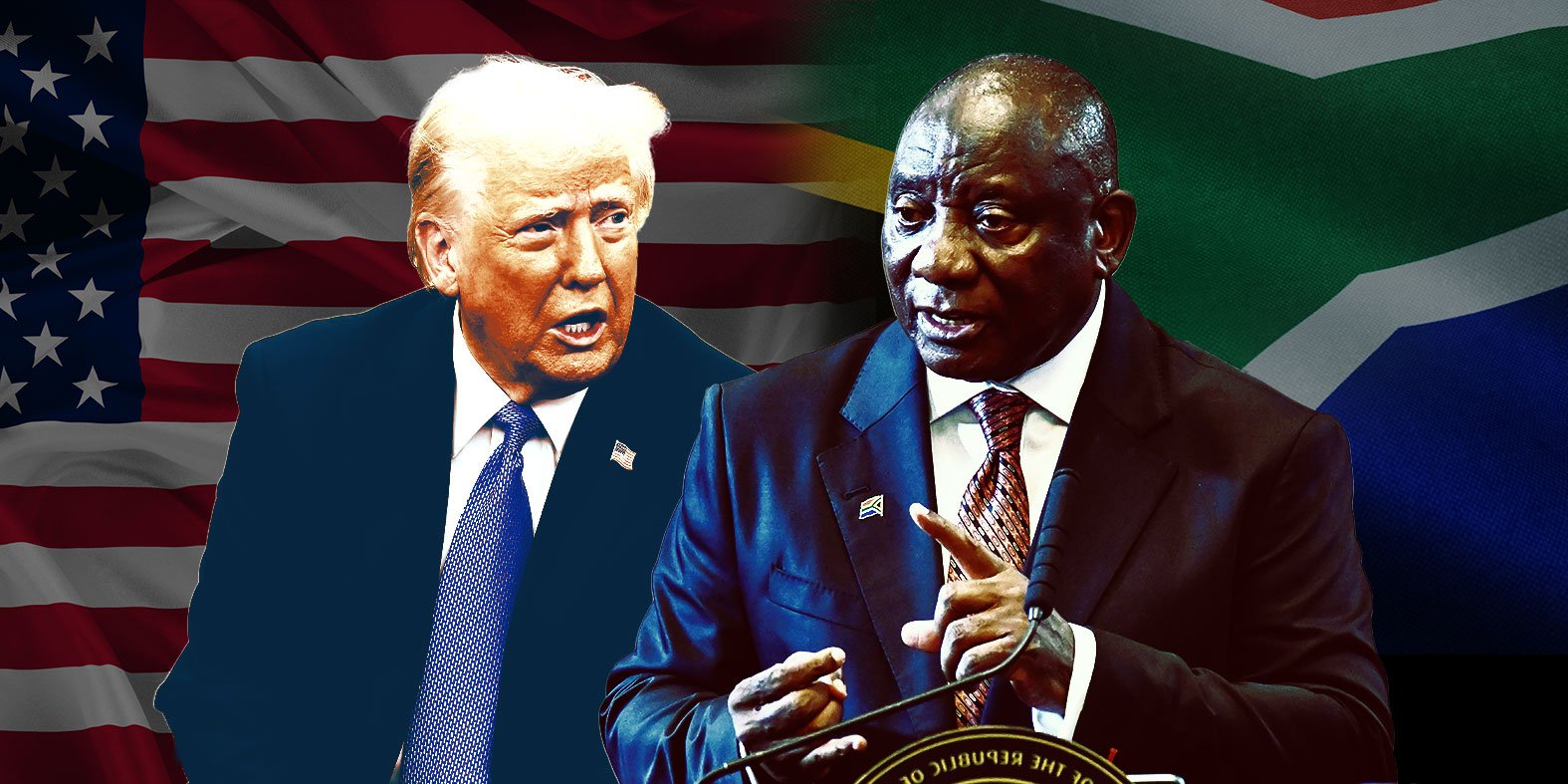
Ramaphosa Condemns US “Kidnapping” of Maduro, Dismisses Fears of South African Invasion
JOHANNESBURG – South African President Cyril Ramaphosa has issued a forceful condemnation of the United States’ military capture of Venezuelan President Nicolás Maduro, labeling the act a violation of international law that sets a dangerous global precedent. Speaking at a political commemoration in Soweto, Ramaphosa demanded the immediate release of Maduro and his wife, Cilia Flores, while simultaneously dismissing concerns that the U.S. action could foreshadow similar aggression against South Africa itself.
The president’s remarks, delivered at the 31st annual commemoration of anti-apartheid stalwart Joe Slovo, positioned South Africa firmly alongside Venezuela in a brewing diplomatic crisis that has divided the international community. Ramaphosa framed the U.S. operation—which involved airstrikes on Caracas and the detention of the Venezuelan leader—as a fundamental assault on the sovereignty of United Nations member states.
“We reject utterly the actions that the United States has embarked upon and stand with the people of Venezuela, and we demand the release of President Maduro and his wife as well.”
A Principle of Sovereignty Forged in Anti-Apartheid Struggle
Ramaphosa rooted his condemnation in the foreign policy principles of the governing African National Congress (ANC), principles he directly connected to the legacy of Joe Slovo. He described Slovo, a former housing minister and commander of the ANC’s armed wing, as an internationalist who fought for oppressed people globally. This history, Ramaphosa argued, now informs South Africa’s solidarity with Palestine, Western Sahara, Cuba, and Venezuela.
“The principle guides our support for the United Nations Charter and the need for international law as a foundation for relations between nations,” Ramaphosa stated. He emphasized that the ANC’s National Executive Committee had already issued a formal statement rejecting the U.S. action and calling for Maduro’s release. Ramaphosa also called on the UN Security Council, where South Africa currently holds a seat, to act decisively to uphold international law and maintain peace, a call detailed in coverage from SowetanLIVE.
The event was attended by South Africa’s ambassador to Venezuela, Carlos Feo Acevedo, who offered a stark, on-the-ground account of the operation. He accused the U.S. of “imperialist” and “colonialist” aggression, claiming the military strikes resulted in Venezuelan military deaths, including members of Maduro’s security team. “Yes, we have been struck, we have been hit, we have been humiliated,” Acevedo said. “But we are not defeated. We will never be defeated.” He praised South Africa’s diplomatic stance as consistent with the UN Charter, a position that is generating significant political debate within the nation, as reflected in broader South African news coverage.
Dismissing Invasion Fears Amidst a Tense US Relationship
Despite the severe diplomatic rebuke, President Ramaphosa moved to calm domestic anxieties about potential U.S. retaliation against South Africa. The relationship between Pretoria and Washington has been notably tense, exacerbated by past comments from U.S. President Donald Trump regarding South Africa’s domestic policies. When questioned by journalists on the sidelines of the event about fears of a possible U.S. invasion, Ramaphosa was unequivocal.
“No, I’m not worried about an invasion of South Africa, not at all. I think we are very far from anything like that.”
He emphasized dialogue as the primary tool for resolving international differences, even with the United States. However, he underscored the profound danger of the precedent set in Venezuela. “What has happened now, basically, is giving carte blanche to anyone to mount an invasion on any country. And, clearly, that cannot be something that we are all pleased with,” Ramaphosa argued. He expressed hope that the “collective wisdom” of the UN Security Council would provide a solution.
This position was immediately criticized by South Africa’s main opposition party, the Democratic Alliance (DA). DA spokesperson on international relations Ryan Smith accused the ANC of “hypocrisy and contradiction,” noting that the government had not made a similar appeal to the Security Council for intervention when Russia invaded Ukraine. “The ANC has again decided to pursue its entrenched party-political interests in our foreign policy,” Smith stated. Ramaphosa dismissed these claims, accusing the DA of selectively choosing which international violations to remember.
The contrasting reactions highlight a deep domestic political divide over South Africa’s foreign policy trajectory. The ANC government, grounding its stance in a history of anti-colonial solidarity, views the Venezuela crisis through the lens of sovereignty and the right to self-determination. Its opponents see an inconsistent and ideologically driven approach that alienates Western democracies. This domestic rift is a key feature of the nation’s current political landscape, as seen in other major stories covered by local media.
For the broader Global South, South Africa’s vocal stance is a significant diplomatic marker. As a influential voice on the African continent and a current non-permanent member of the UN Security Council, Pretoria’s condemnation carries weight. It signals a rejection of unilateral military intervention by major powers, a position likely to resonate with many nations wary of neo-colonial overreach. The crisis has effectively become a flashpoint in the ongoing struggle to define the rules of the 21st-century international order: will it be governed by a multilateral system of laws and charters, or by the unilateral might of individual powers?
As Maduro faces a U.S. court, the legal and diplomatic battles are just beginning. Ramaphosa’s speech ensures that South Africa will be a prominent voice in the diplomatic fray, advocating for a resolution based on international law rather than force. The coming weeks at the United Nations will test whether that advocacy can translate into meaningful collective action, or if the world is indeed entering an era where the precedent of Caracas becomes a recurrent tool of power politics.
