
A Dangerous Precedent: The Legal and Global Repercussions of Maduro’s Capture
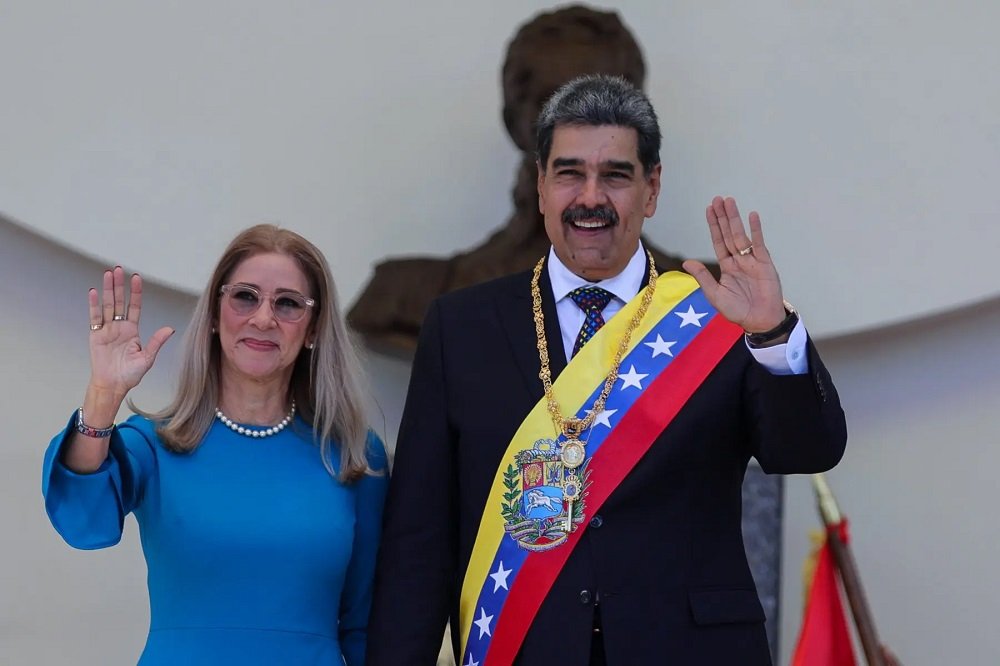
NEW YORK – The shackled appearance of deposed Venezuelan President Nicolás Maduro in a Manhattan courtroom this week represents far more than the prosecution of a single leader. Legal experts and diplomats globally are sounding alarms that the United States’ military capture of a foreign head of state sets a perilous new precedent, one that threatens to destabilize the foundational norms of international sovereignty and law. The operation, which President Trump’s administration defends as a lawful action against a “narco-terrorist,” is being widely condemned as an act of state kidnapping that could invite chaos and reciprocal actions in the future.
During his arraignment, Maduro, listening through headphones to an interpreter, defiantly stated, “I am innocent… I am still president of my country.” His plea followed a daring raid on Caracas, details of which were reported by international news agencies covering the event. Outside the courthouse, the scene was a microcosm of the global divide, with both supporters and detractors of the Venezuelan leader gathering in protest.
“I anticipated voluminous and complex litigation over what he called his client’s ‘military abduction.'”
The Foundation of a Legal Battle: Sovereignty vs. “Justice”
At the heart of the coming legal maelstrom is a direct challenge to the principle of sovereign immunity, a cornerstone of the international order since the Peace of Westphalia in 1648. Maduro’s defense is being led by Barry Pollack, the acclaimed attorney who secured Julian Assange’s freedom. Pollack has immediately framed the case not merely as a criminal defense but as a constitutional and international legal challenge against what he terms an “abduction.”
Pollack’s strategy underscores a critical argument: if the United States can militarily extract a sitting head of state from his own capital based on its own unilaterally applied laws, then the entire framework of national sovereignty crumbles. This action did not follow a referral from an international tribunal or a UN Security Council resolution. It was a unilateral application of U.S. domestic law on foreign soil, a move that China, Russia, and numerous other nations have already decried at the UN as a return to “might-makes-right” imperialism.
“Typically, when I meet with a client, they are facing what may be the worst crisis that they have ever faced… It’s somebody that I’ve come to know and respect.”
Why This Is a Catastrophic Precedent for the Planet
The ramifications of this precedent extend far beyond U.S.-Venezuela relations, creating a template for global instability:
1. The End of Diplomatic Security: Heads of state and government officials historically travel under assurances of safe passage. This action eviscerates that trust. What now stops a rival power from orchestrating the capture of a U.S. ally—or even a U.S. official abroad—on charges it unilaterally deems legitimate? The diplomatic realm could devolve into a landscape of fear and hostage-taking.
2. The Green Light for Regional Conflicts: The precedent provides a ready-made justification for any regional power to conduct military raids on its neighbors. Imagine a scenario where Country A, accusing the leader of Country B of terrorism or corruption, launches a “law enforcement operation” to seize them. The U.S. action has just written the playbook.
3. The Undermining of International Institutions: By bypassing the United Nations and international courts, the United States has seriously weakened these institutions. It signals that powerful nations need not engage with multilateral systems, destroying decades of effort to build a rules-based global order, however imperfect.
4. A Legacy of Anti-American Resentment: This heavy-handed approach, coupled with Trump’s comments about claiming Venezuelan oil, validates the very “imperialist” narrative Maduro has long espoused, fueling anti-American sentiment across Latin America and the Global South for a generation.
The Hollowing of U.S. Moral Authority and Legal Standing
While the Trump administration insists its actions were legal, this stance is ethically and legally myopic. The U.S. has historically criticized other nations for “extraordinary renditions” and violations of sovereignty. That moral authority is now obliterated. Furthermore, Pollack is a master at explaining complex facts to a jury. He will not only argue the specifics of the drug charges but will put the U.S. government’s own conduct on trial, portraying Maduro as the victim of a political kidnapping that violated the very laws America purports to uphold.
The political transition in Caracas further complicates the picture. The swearing-in of Maduro’s deputy, Delcy Rodríguez, as interim president—an arrangement seemingly endorsed by U.S. intelligence—reveals a pragmatic, perhaps cynical, realpolitik. The U.S. has sidelined the democratic opposition it once championed to work with remnants of the very socialist government it just overthrew by force, all in the name of stability and control over oil resources.
The world now watches a dual spectacle: a historic legal battle in a New York courtroom and an unprecedented experiment in neo-colonial administration in Venezuela. The outcome will determine more than one man’s fate; it will shape whether the world reverts to an era where borders are meaningless to the powerful, or whether the shaken rules of international conduct can still hold. The precedent set this week is not one of justice, but of a profound and dangerous rupture in the global order.
