

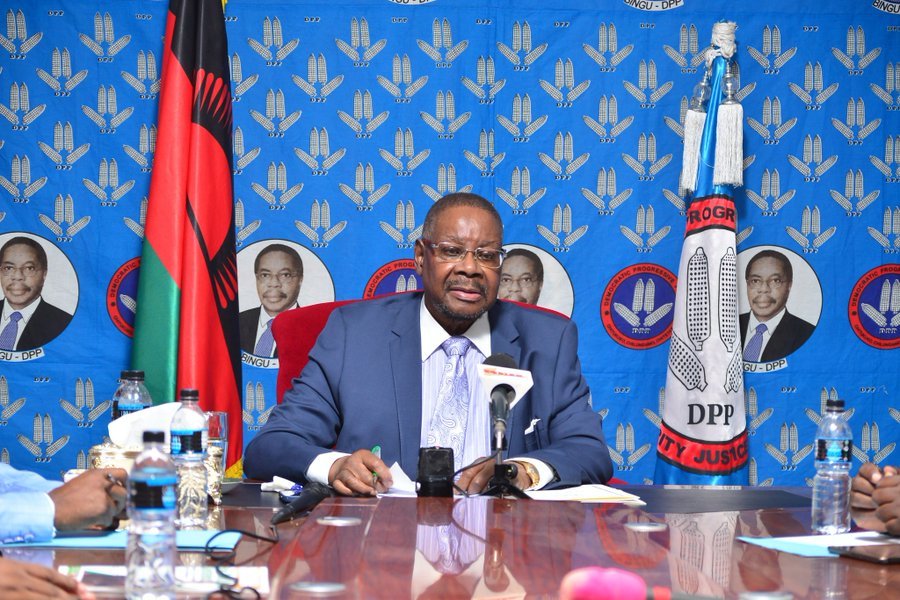
Malawi’s President Chakwera Concedes Defeat in Historic Election Return for Mutharika
LILONGWE – Malawi’s President Lazarus Chakwera has conceded defeat in the country’s presidential election, paving the way for the return of his predecessor Peter Mutharika in a dramatic political reversal that underscores the electorate’s frustration with economic hardship and unfulfilled promises. The concession, delivered in a national address on Wednesday, marks a significant moment in Malawian democracy, demonstrating the maturity of its electoral process and the peaceful transfer of power in a region often plagued by contested polls.
According to official results from the Malawi Electoral Commission (MEC), Mutharika, who led the country from 2014 to 2020, secured a decisive victory with approximately 54% of the vote, while Chakwera trailed with about 42%. The election, held on Tuesday, was largely peaceful with high voter turnout despite logistical challenges in some districts. Chakwera’s graceful concession speech emphasized national unity and the importance of respecting the will of the people, setting a constructive tone for the transition period.
The outcome represents a remarkable political comeback for the 84-year-old Mutharika, whose Democratic Progressive Party (DPP) was swept from power in the historic 2020 election that followed a court-ordered rerun. That election had been hailed as a victory for democracy after the constitutional court nullified Mutharika’s initial 2019 win due to widespread irregularities. As reported by Al Jazeera, Chakwera acknowledged the people’s verdict with humility, stating that “the voice of the people is the voice of God.”
A Referendum on Economic Performance and Broken Promises
Analysts widely view the election results as a stern referendum on Chakwera’s five-year tenure, which began with high expectations but was hampered by persistent economic challenges. The president, who leads the Malawi Congress Party (MCP) and the Tonse Alliance coalition, had campaigned in 2020 on an anti-corruption platform with promises to revitalize the agriculture-dependent economy and create jobs. However, his administration struggled to curb inflation, address foreign exchange shortages, and alleviate poverty that affects much of the population.
Voter discontent was particularly palpable in urban areas and among the youth, who had been key supporters of Chakwera in 2020. Many expressed frustration with the slow pace of change and the government’s inability to tackle corruption effectively. A preliminary analysis of the Malawi elections results suggests that Mutharika successfully capitalized on this disappointment, positioning himself as a experienced hand who could restore stability. The BBC’s coverage of the election outcome highlighted how economic concerns ultimately dominated voter decision-making.
“The people have spoken, and we must listen. I have called Dr. Mutharika to congratulate him on his victory and offered my full support during this transition period. What matters most now is the peace and stability of our nation,” President Chakwera stated in his concession speech, demonstrating a commitment to democratic norms that has earned praise from regional observers.
Mutharika’s campaign focused heavily on economic management, reminding voters of the relative stability during his previous term and criticizing Chakwera’s handling of the economy. The DPP also leveraged ethnic and regional loyalties, particularly in the southern region where the party has traditional strongholds. The return to power of the former president suggests that for many Malawians, the promise of change in 2020 did not materialize into tangible improvements in their daily lives.
Democratic Maturity and Regional Implications
The peaceful nature of this electoral transition stands as a significant achievement for Malawian democracy, especially in a region where leaders often cling to power and dispute unfavorable results. The 2020 election had already established Malawi as a democratic exemplar in Africa after the courts courageously nullified a flawed election. Chakwera’s gracious concession now reinforces this reputation, showing that political power can change hands through ballots rather than violence.
International observers from the African Union, the Southern African Development Community (SADC), and other bodies have praised the conduct of the election and Chakwera’s statesmanlike response to defeat. This stands in stark contrast to recent electoral controversies in other parts of the continent where outcomes have been hotly contested. The smooth process bolsters Malawi’s standing as a stable democracy capable of managing political transitions through established institutions. For more analysis on African elections and governance, visit Africanews Desk.
“Malawi has once again demonstrated that democracy is alive and well in our nation. The peaceful transfer of power is the cornerstone of any functioning democracy, and I commend President Chakwera for his dignified acceptance of the results,” said a spokesperson for the Electoral Institute for Sustainable Democracy in Africa (EISA), which observed the polls.
For Mutharika, the victory presents an opportunity to complete projects started during his previous administration and to address the economic challenges that contributed to his initial defeat. However, he will face immediate tests, including managing a struggling economy, healing political divisions, and addressing the expectations of supporters who have returned him to power. At 84, questions about his health and ability to govern effectively for a full term are likely to persist.
The election also marks a setback for Vice President Saulos Chilima, who had been positioning himself as a future presidential contender. Chilima, who served as Chakwera’s deputy after their successful coalition in 2020, now faces an uncertain political future following their defeat. The dynamics within the Tonse Alliance, which brought together multiple opposition parties to defeat Mutharika in 2020, have fractured under the weight of governing challenges and internal disagreements.
As Malawi prepares for this new chapter, the peaceful resolution of the Malawi elections offers hope that democratic institutions can withstand political turbulence. The focus now shifts to the transition process and Mutharika’s policy priorities when he takes office. The incoming administration will need to move quickly to address economic concerns while maintaining the democratic gains that have distinguished Malawi in a sometimes troubled region. The world will be watching as this small but significant African democracy navigates its latest political transition.
